Stories of America: Home of the Brave
This Storyboard - which we call our "stain" chart - shows you at a glance how strong or weak a given narrative is right now relative to its history.
For each narrative or "semantic signature" listed on the left of the chart, we have a series of blue dots on the right, each of which represents a specific weekly density or volume of that narrative. reading from within the date range that we are covering. The red arrow is the most recent reading, so it's just like the "YOU ARE HERE" spot on a map. The x-axis scale shows the range of index values. If a dot is at 100, that means that story is 100% more present in media than usual. If it’s at 0, it means it’s at its normal level.
The light blue shaded box covers the middle 50% of readings across the date range, so you can see quickly if the current reading is typical (inside the blue box), depressed (left of the blue box), or elevated (to the right of the blue box).
If you hover over a specific blue dot, you will see the specific date and measurement that the dot represents.
The Pulse
Emboldened, Entrenched, and Standing Firm: Military Confidence, Civic Defiance, and Workforce Stability Reshape American Narratives
Executive Summary
- Media affirmations of American military superiority reached their most extreme density in the dataset this quarter, fueled by active combat operations in Iran and the Pentagon's aggressive pivot to an AI-first warfighting posture. Language questioning U.S. military strength fell further below average in parallel, producing a strikingly one-sided media environment in which American military dominance is treated as settled fact.
- The assertive, defense-oriented language saturating military coverage has a direct civic counterpart. Perscient's semantic signatures tracking Americans' willingness to fight and their fear of standing up both moved sharply in the direction of greater combativeness this month. The "No Kings" protest movement—potentially the largest single-day mobilization in American history—frames dissent as patriotic defense rather than opposition, drawing from the same rhetorical well of assertive American identity that animates military pride narratives.
- Language about geographic mobility and Americans moving for jobs collapsed at the fastest rate in the dataset, even while language about contentment with stable employment crossed above average. The cultural emphasis in media has turned decisively toward standing one's ground—whether in protest, in a job, or in a community—rather than striking out for new territory, a pattern that reinforces the entrenchment posture visible in both civic and military narratives.
- Media language celebrating American risk-taking and language lamenting its decline both fell simultaneously, indicating that the conversation about risk itself is receding from media. Entrepreneurial activity persists at elevated rates, but it is being redefined: AI-enabled, lean ventures launched from home have replaced the traditional narrative of bold geographic or career leaps, and long-term business survival rates have declined sharply.
- Across military, civic, and economic domains, the dominant media posture of early 2026 is one of entrenchment and assertion in place. Self-reliance narratives remain above average, but the frontier mythology that once accompanied them is fading. The American story being told in media is less about expansion and more about fortification—betting on oneself where one already stands, defending what one already has, and adapting through new tools rather than new destinations.
---
Military Superiority Narratives Surge Amid Pentagon's AI-First Strategy and Active Combat Operations
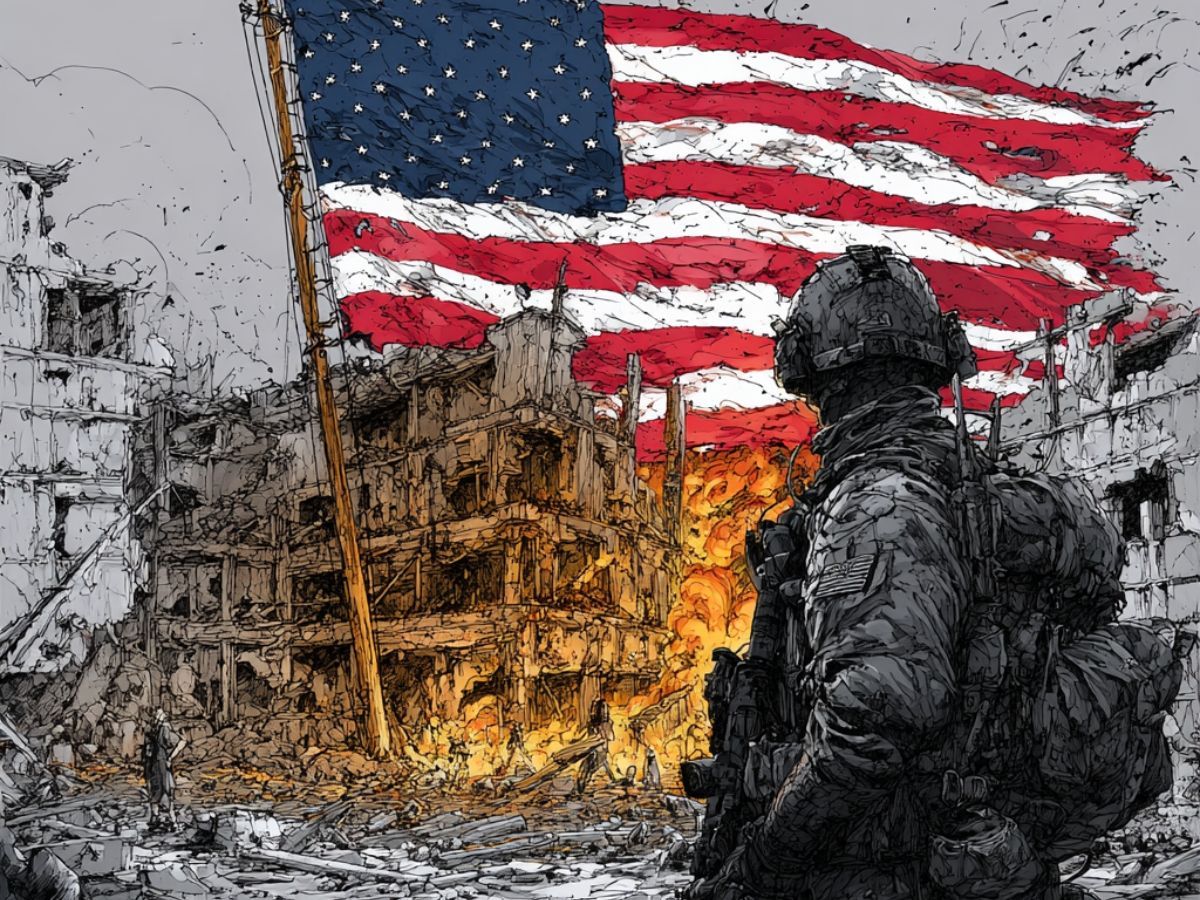
Perscient's semantic signature tracking the density of language affirming that American soldiers are the best in the world registered an Index Value of 123 as of March 31, 2026, more than double the long-term mean and the highest reading of any signature in the dataset. This value strengthened by 69.5 points from the prior month's 54, representing the single largest month-over-month increase across all signatures tracked. The companion signature tracking language arguing that the American military has lost its edge sits at -50, well below average and still declining. Together, these paired readings describe a media environment thoroughly saturated with affirmations of U.S. military strength while skepticism of that strength has grown conspicuously quiet.
Active combat operations in Iran, now several weeks old, have provided a real-time showcase for American military capability. As one Chinese government adviser noted on social media, the operations prove that "Washington's military strength remains superior, its warfare methods have evolved further, and the popular Chinese view of US decline is flatly contradicted." The Heritage Foundation's 2026 Index of U.S. Military Strength found that while threats to U.S. vital interests remain "high," researchers for the first time identified "an arrest of decline" in overall military capability. The United States retains its number-one ranking among 145 countries assessed by Global Firepower, outpacing Russia, China, and India by a wide margin.
The defining feature of this month's military narrative is the rapid, deliberate integration of artificial intelligence into the warfighting apparatus. The Department of War has been directed to "accelerate America's Military AI Dominance by becoming an 'AI-first' warfighting force across all components, from front to back." The Pentagon has requested $13.4 billion for AI-related systems in 2026 and an additional $9 billion for supporting data infrastructure. It has also formally initiated plans to adopt Palantir's Maven AI as an official program of record, mandating integration across all branches by September 2026. Maven has already functioned as the primary AI operating system in recent operations, including thousands of targeted strikes.
The commercial AI ecosystem feeding the military is itself becoming a point of contention. Anthropic's Claude was used in Iran operations, but following disagreements over usage restrictions, the Defense Department designated the company a supply chain risk. OpenAI announced an agreement for military use in classified settings, and Elon Musk's xAI secured a contract for the Pentagon to use Grok, prompting congressional scrutiny from Senator Elizabeth Warren. As one defense policy researcher cautioned, the Pentagon's AI strategy explicitly accepts that "the risks of not moving fast enough outweigh the risks of imperfect alignment," a formulation that trades safety guardrails for speed. Other analysts warn that the debate over lethal autonomy obscures a deeper vulnerability: that reliance on commercial AI tools may erode the military's native capacity to distinguish fact from fiction. Our companion signature tracking the density of language consistent with Americans' willingness to fight to defend what is theirs also strengthened by 14.4 points to 12, reinforcing the broader pattern of assertive defense language pervading media content while the country wages an active war.
Civic Combativeness Rises as Fear of Standing Up Declines Sharply
The assertive language pervading military discourse has a civic counterpart. Perscient's semantic signature tracking language consistent with Americans' willingness to fight to defend what is theirs rose by 14.4 points to an Index Value of 12, crossing from below average last month to above average. In parallel, the signature tracking language arguing that Americans are afraid to fight for their rights declined by 13.5 points to -4, moving from above average to below. The combined directional shift of nearly 28 points across these paired signatures represents one of the most pronounced movements in the dataset this month.
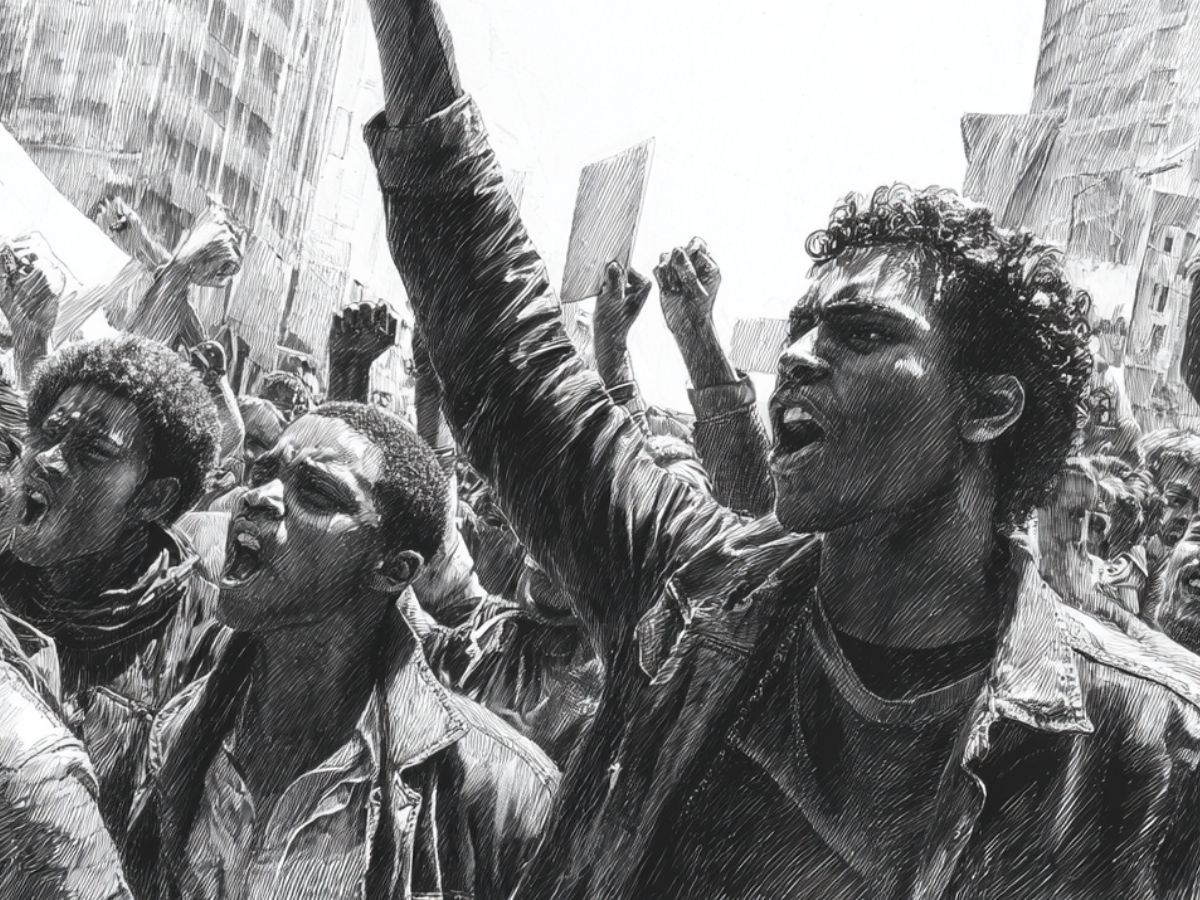
On March 28, 2026, the third round of "No Kings" demonstrations unfolded across the country. Organizers reported more than 3,300 events drawing an estimated eight to nine million participants, a figure that, if confirmed, would make it the largest single-day protest in American history. The first No Kings mobilization in June 2025 drew an estimated four to six million people across roughly 2,100 sites; the second, in October, involved an estimated seven million across more than 2,700 cities. The March event expanded the footprint further; two-thirds of events took place outside major cities, a nearly 40% increase for smaller communities compared to June. Almost half of protests took place in GOP strongholds; Texas, Florida, and Ohio each hosted over 100 scheduled events.
Organizers described the rallies as spaces to "exercise their rights as Americans in a patriotic and safe way." One New York attendee compared the demonstrations to the spirit of the American Revolution: "We fought against having kings and we fought for freedom. We're just doing it again." Congressman Jim McGovern captured the framing on social media: "When you love something, you fight for it. No kings. Not today. Not ever." This casting of protest as patriotic defense rather than opposition maps precisely onto the semantic territory of our "willing to fight" signature, which captures language connoting protective assertion rather than aggression.
The breadth of grievances fueling the movement—from the Iran war to immigration enforcement to transgender rights rollbacks—provides multiple pathways for the combativeness narrative to intensify. Analysts note that the country may soon see 12 million Americans engaged in nonviolent mobilization, roughly 3.5 percent of the population, a threshold that political science research associates with movements that become difficult for governments to ignore.
While civic assertiveness grows, Perscient's semantic signature tracking language about pioneer mobility and the idea that America is built by people who left everything behind declined by 14.5 points to -18, and the companion signature tracking language about Americans moving for jobs less often fell by 47.4 points to -50. The cultural moment emphasizes standing one's ground rather than striking out for new territory. Both those supporting and opposing current government policy are adopting combative, defense-oriented framing, creating a distinctive tension in the media environment where military pride language and civic protest language draw from a shared well of assertive American identity.
Economic Stability Replaces Geographic Mobility as Americans Bet on Themselves in Place
The decline in mobility language reflects a deeper economic recalibration playing out across the labor market. Perscient's semantic signature tracking language consistent with Americans moving for jobs less often registered a decline of 47.4 points to an Index Value of -50, the largest single-month change in the dataset. The narrative that Americans are geographically immobile has grown dramatically quieter in media, even as underlying data confirms that mobility remains constrained. The pandemic-era rate of 14.2 moves per 1,000 people in 2022 has fallen to 2.8 per 1,000 as of 2024, and nearly eight in ten moves are now intrastate rather than long-distance.
Filling the space vacated by mobility discussions is a quiet language of contentment and endurance. Our semantic signature tracking language consistent with Americans being content with comfortable jobs rose by 11.8 points to an Index Value of 10, crossing from slightly below average to above. This shift sits against a labor market that offers few attractive alternatives. The February jobs report showed a decline of 92,000 jobs and a rise in the unemployment rate to 4.4 percent. The perceived probability of finding a new role within three months of a job loss has dropped to 44.0%, the second-lowest reading on record. As USA Today reported, just 28% of workers say that now is a good time to find a new job.
Two signatures tracking opposite poles of the American risk narrative declined in tandem. Perscient's semantic signature tracking language celebrating Americans as risk-takers fell by 4.6 points to -6, while the signature tracking language lamenting that Americans have become afraid to take risk fell by 7.6 points to -8. The media conversation about risk itself is quieting, neither championing entrepreneurial daring nor mourning its absence, displaced by narratives about in-place stability and self-reliance.
And yet entrepreneurial activity persists in a different form. Americans filed 1.6 million business applications from November through January, the most of any three-month period since at least 2004. But many of these entrepreneurs are leaving jobs preemptively in anticipation of layoffs, and AI is both the threat prompting their departure and the tool enabling their ventures. In a Resume Now poll, four in ten workers said that AI was already "replacing, devaluating, or overlapping" with elements of their work. As one social media commentator observed, the startups people are founding now "run leaner from day one" because AI handles what used to require the first five hires. The 2025-2026 GEM U.S. report from Babson confirms the paradox: while the startup rate is strong, the rate of established business ownership has been cut roughly in half since 2019, from 10.6% to 5.5%. People are starting ventures at high rates, but fewer are reaching long-term viability.
Our semantic signature tracking language about real Americans betting on themselves holds steady at 15, modestly above the long-term mean, while the signature tracking language about America being a country built on the frontiers remains elevated at 35. Frontier and self-reliance myths remain active in media, even as the literal mobility narratives fade. Self-reliance is being reframed around staying put rather than moving, around using AI to build something lean from one's living room rather than packing up for a new city. According to Deloitte's survey, only 6% of Gen Z want to climb the corporate ladder, preferring better benefits, flexible hours, and hybrid structures. The American narrative of self-made success persists, but it is being rebuilt on a foundation of staying in place, adapting with new tools, and weathering a labor market that rewards endurance over ambition.
Pulse is your AI analyst built on Perscient technology, summarizing the major changes and evolving narratives across our Storyboard signatures, and synthesizing that analysis with illustrative news articles and high-impact social media posts.