We Can Do It Pulse
The Pulse
October 5, 2026·We Can Do It Pulse

EXECUTIVE SUMMARY
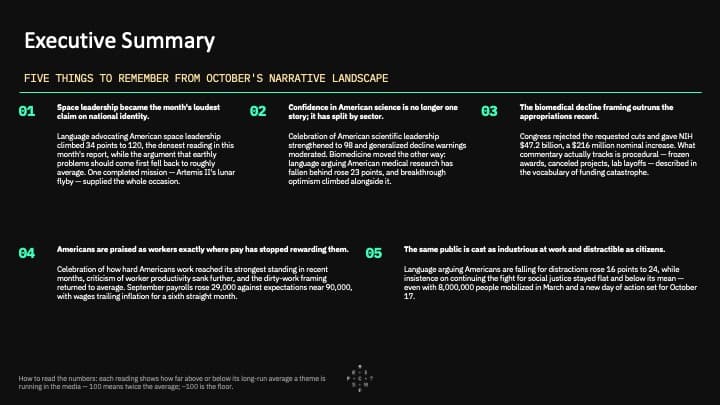
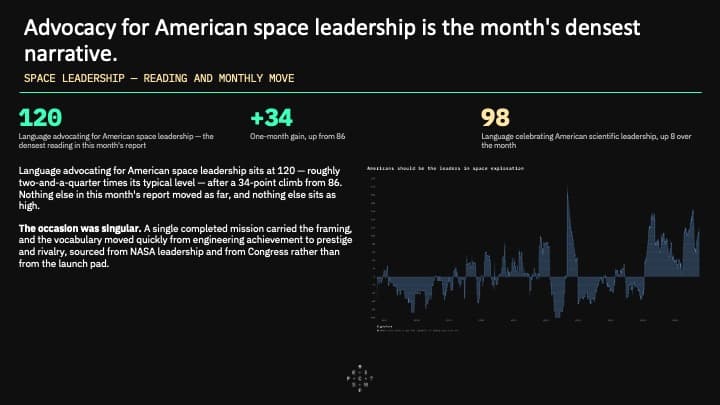
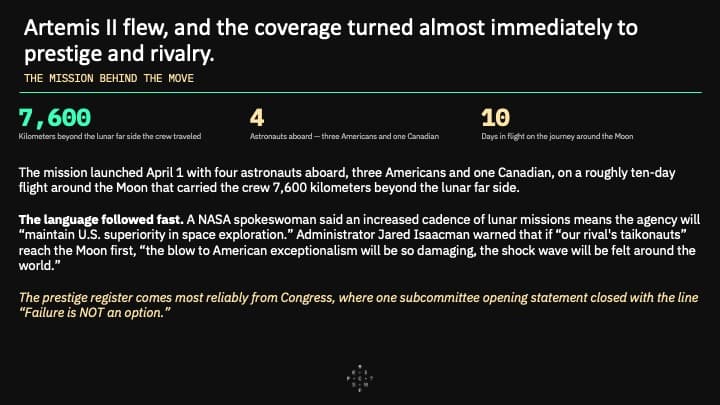
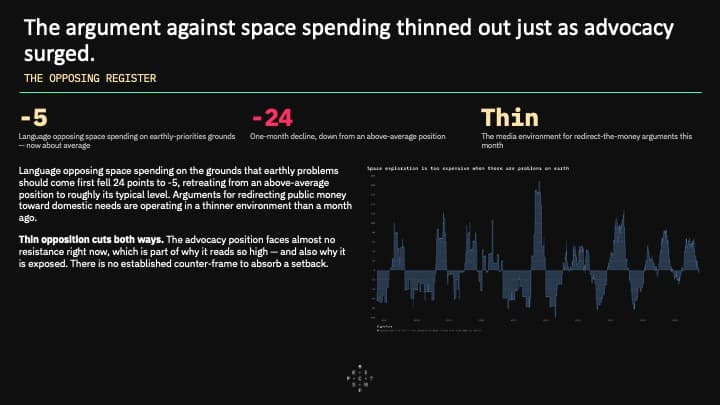
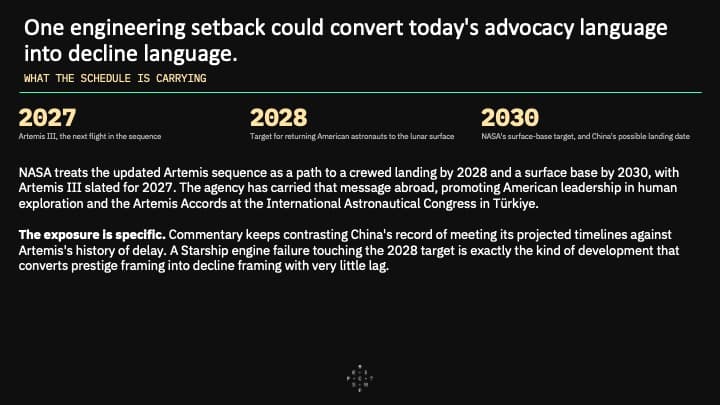
- Space leadership is the month's loudest claim on national identity, and it is built on a single successful mission. Perscient's semantic signature tracking the density of language advocating for American space leadership posted the largest one-month gain of anything we follow and now sits at the top of the file, while the counter-signature objecting to space spending on earthly-priorities grounds fell back toward average. Artemis II's completed lunar flyby supplied the occasion, and the framing has migrated quickly from engineering achievement to prestige and rivalry language sourced from NASA leadership and Congress. The thinness of the opposing register means the advocacy position faces little resistance in the current media environment, which also leaves it exposed: a Starship engine failure touching the 2028 landing target is precisely the sort of event that could flip this language toward decline framing with minimal lag.
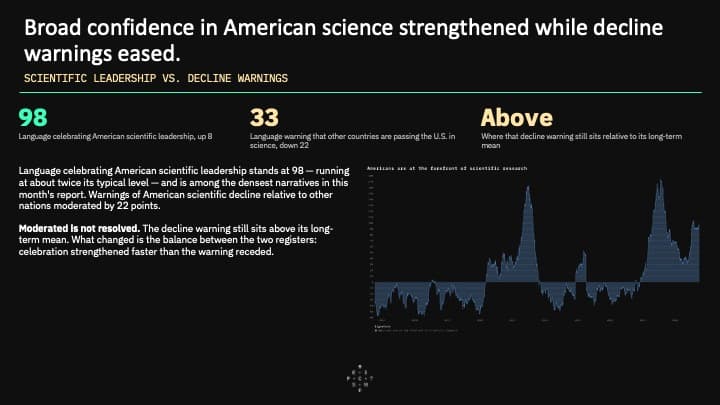
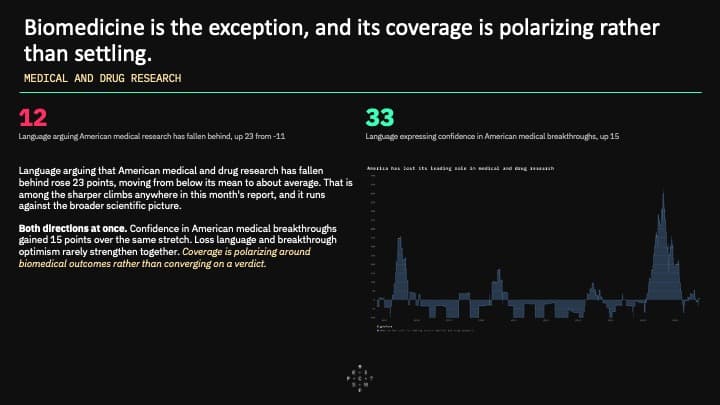
- Confidence in American science is not a single story; it has fractured along sector lines. Broad celebration of American scientific leadership strengthened and generalized decline warnings moderated, yet biomedicine moved the opposite way. The signature tracking language arguing that American medical and drug research has fallen behind registered the second-largest increase in the file, and, unusually, the signature capturing confidence in American medical breakthroughs climbed at the same time. Coverage is polarizing around biomedical outcomes rather than settling on a verdict.
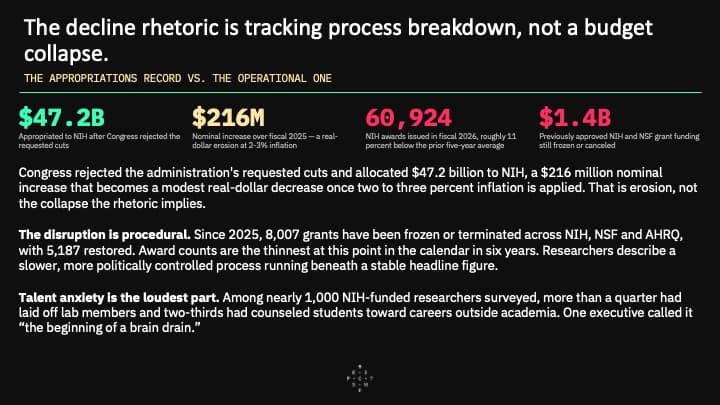
- The biomedical decline framing outruns the appropriations record, though the operational disruption is real. Congress rejected the requested cuts and gave NIH a small nominal increase, a modest real-dollar erosion rather than the collapse the rhetoric implies. What commentary captures is procedural rather than budgetary: grant awards at a six-year low, roughly $1.4 billion still frozen, canceled projects, lab layoffs, and survey evidence of researchers weighing exits. Media language is tracking process breakdown and talent anxiety while using the vocabulary of funding catastrophe.
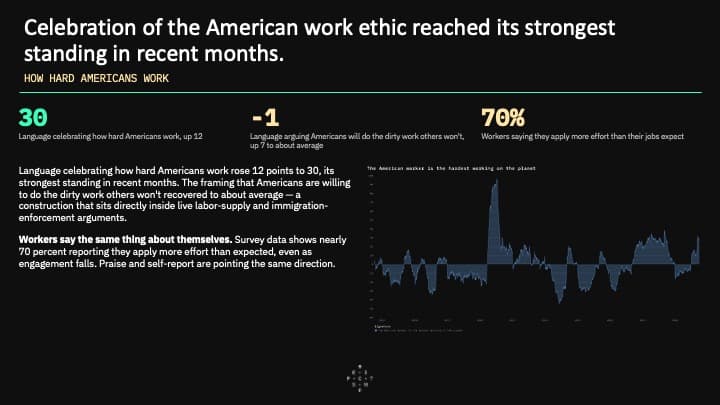
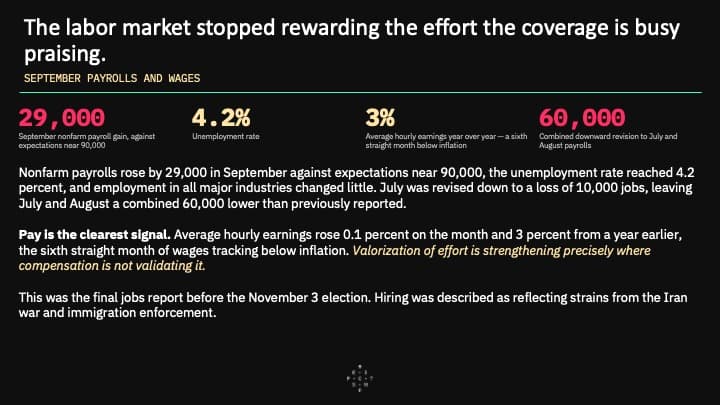
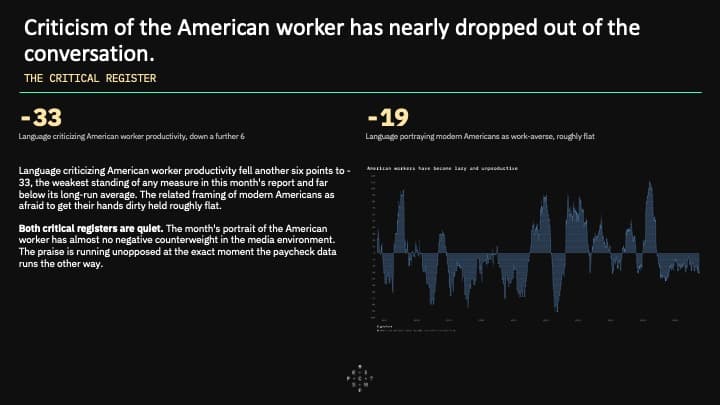
- Americans are being praised as workers at the exact moment the labor market stopped rewarding them. Celebration of American work ethic reached its strongest recent standing, criticism of worker productivity sank to the lowest reading in the entire file, and the "willing to do the dirty work" framing recovered to average, a construction that sits directly inside live immigration-enforcement arguments. The September payroll miss, downward revisions, and a sixth consecutive month of wages trailing inflation point the other way. Valorization of effort is strengthening in the media environment precisely where compensation is not validating it.
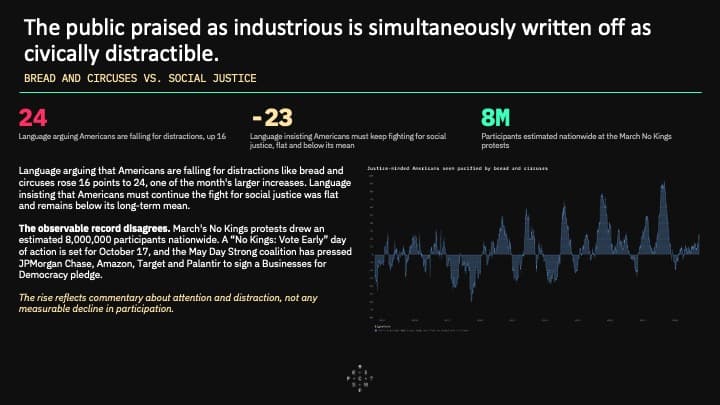
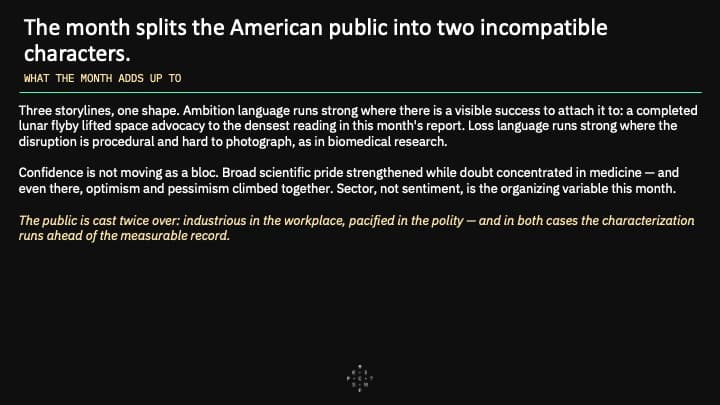
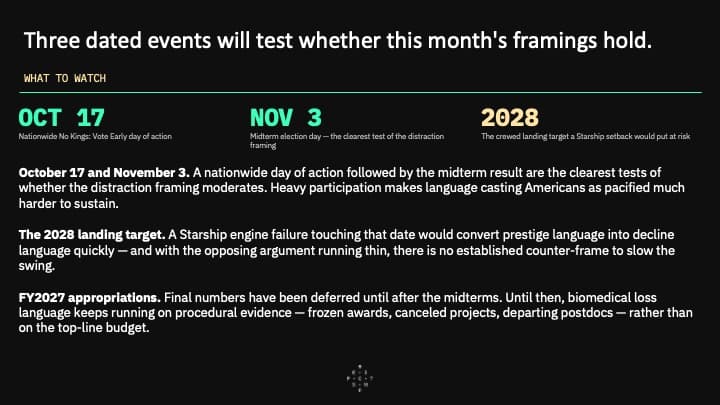
- The same public celebrated as industrious is being characterized as civically distractible, despite contrary evidence. The bread-and-circuses signature posted one of the month's larger increases while language insisting on continued social-justice struggle stayed flat and below its mean, even though the March No Kings protests are regarded as the largest single-day mobilization in U.S. history and further coordinated action is scheduled for mid-October. Taken with the labor finding, the month's portrait of the American public is split by role: industrious in the workplace, pacified in the polity. The October 17 day of action and the November 3 result will test whether the distraction framing holds.
Last updated: ...