
Land of Opportunity Pulse
The Pulse
October 5, 2026·Land of Opportunity Pulse



Executive Summary
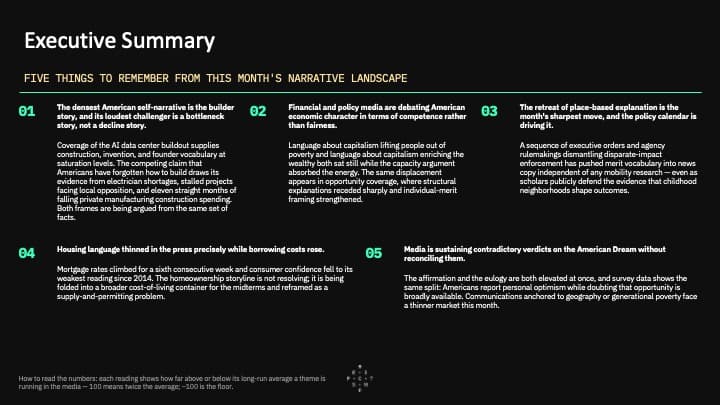
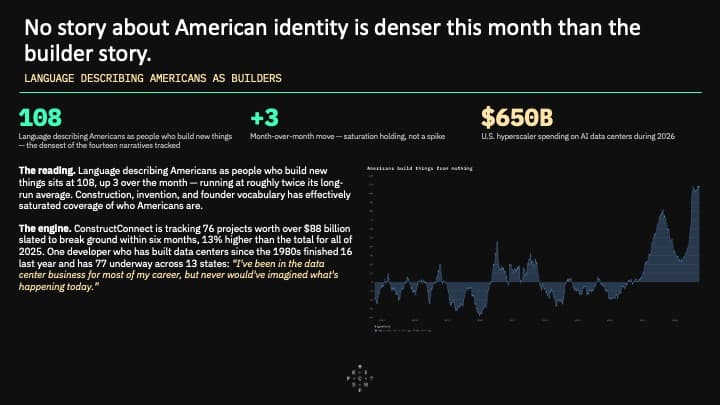
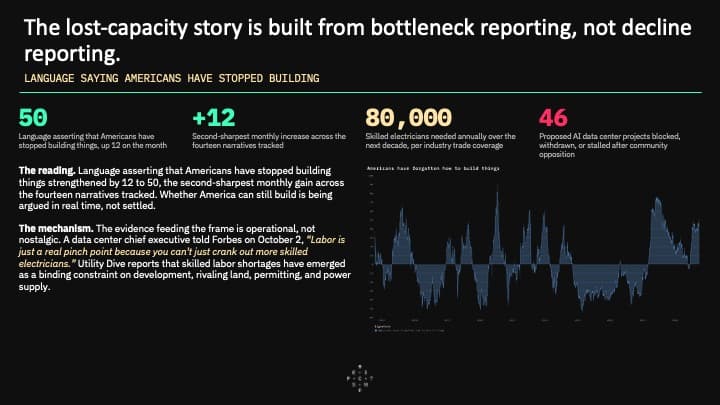
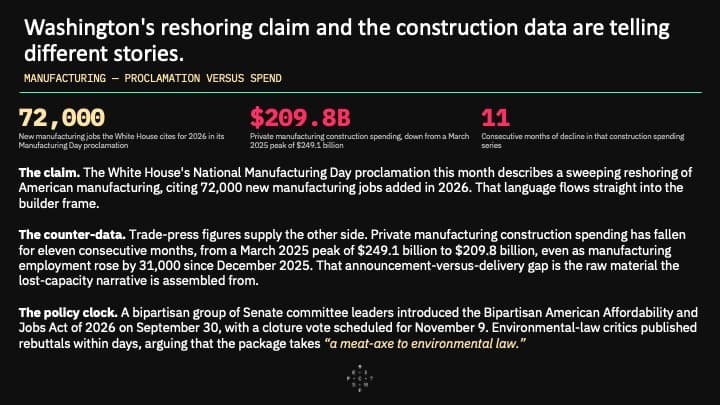
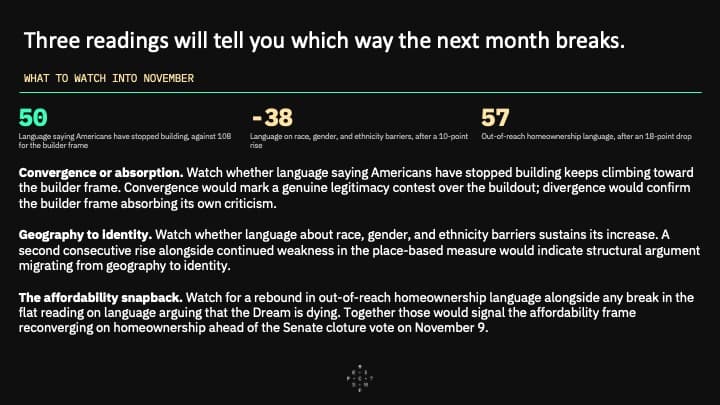
- The densest story about American identity this quarter is the builder story, and its loudest challenger is not a decline narrative but a bottleneck narrative. Coverage of the AI data center buildout supplies construction, invention, and founder vocabulary at saturation levels, while the competing claim that Americans have forgotten how to build draws its evidence from electrician shortages, stalled projects facing local opposition, and the gap between reshoring proclamations and eleven straight months of falling private manufacturing construction spending. Both frames are being argued from the same set of facts.
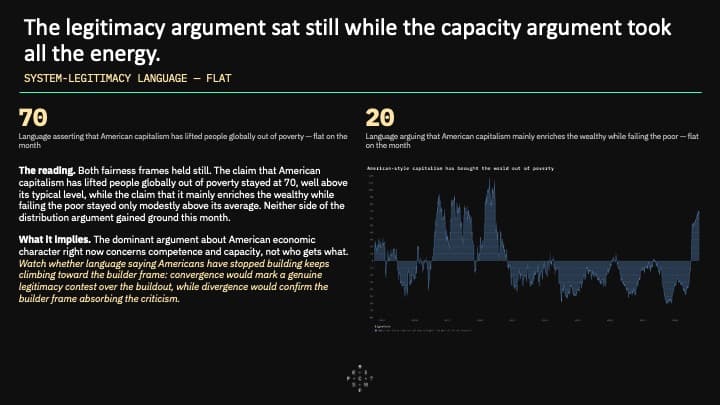
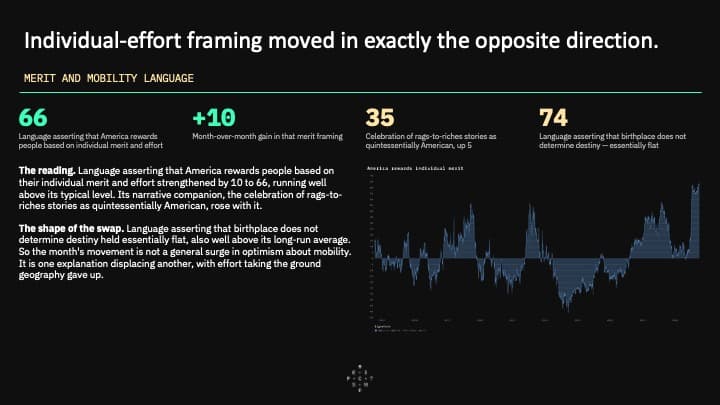
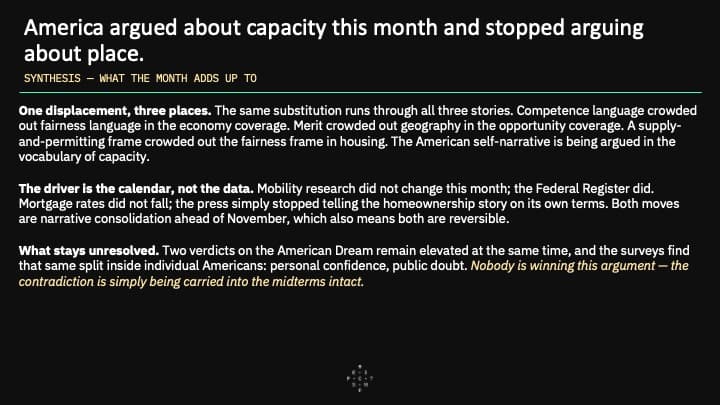
- Financial and policy media are debating American economic character in terms of competence rather than fairness.Language about capitalism lifting people out of poverty and language about capitalism enriching the wealthy both sat still, while the capacity argument absorbed the energy. The same displacement appears in the opportunity coverage, where structural explanations tied to neighborhood effects and inherited disadvantage receded sharply and individual-merit framing strengthened.
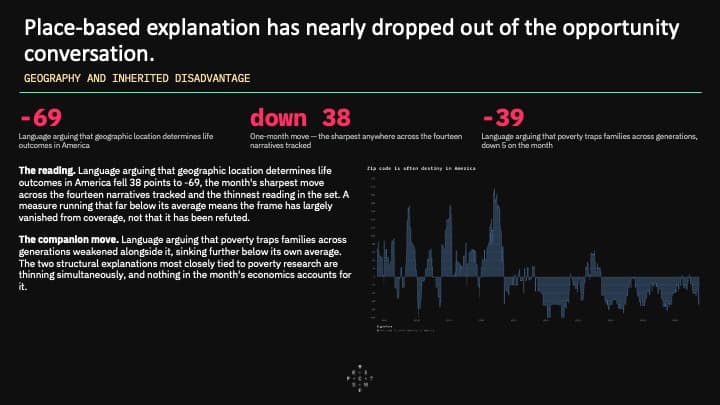
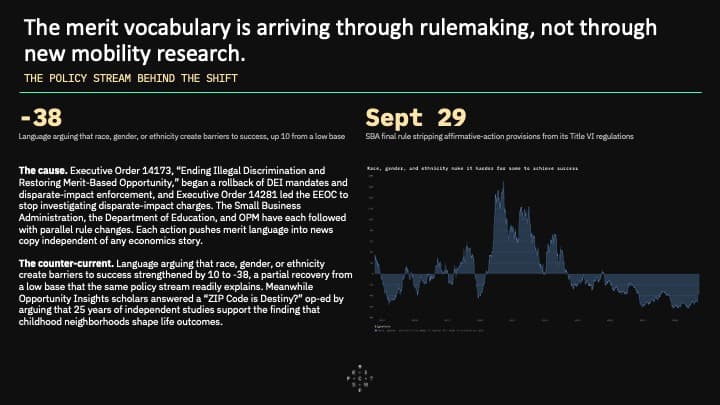
- The retreat of place-based explanation is the single largest move in the dataset, and it is being driven by the policy calendar rather than by new economics. A sequence of executive orders and agency rulemakings dismantling disparate-impact enforcement has pushed merit vocabulary into news copy independent of any mobility research, even while scholars publicly defend the evidence that childhood neighborhoods shape outcomes.
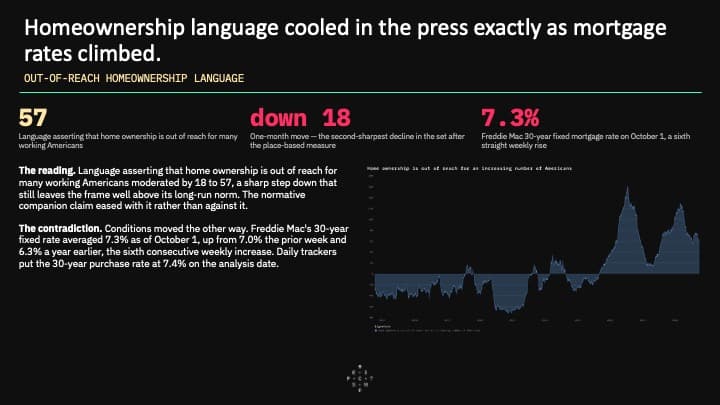
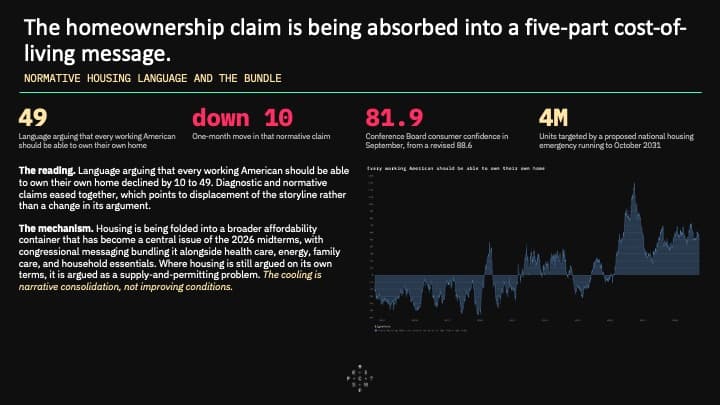
- Housing language thinned in the press precisely while borrowing costs rose, with mortgage rates climbing for a sixth consecutive week and consumer confidence falling to its weakest reading since 2014. The homeownership storyline is not resolving; it is being folded into a broader cost-of-living container for the midterms and reframed as a supply-and-permitting problem. This cooling reflects narrative consolidation, not improving conditions.
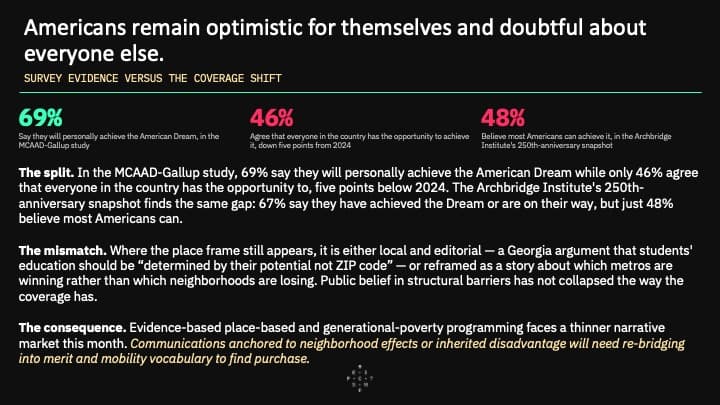
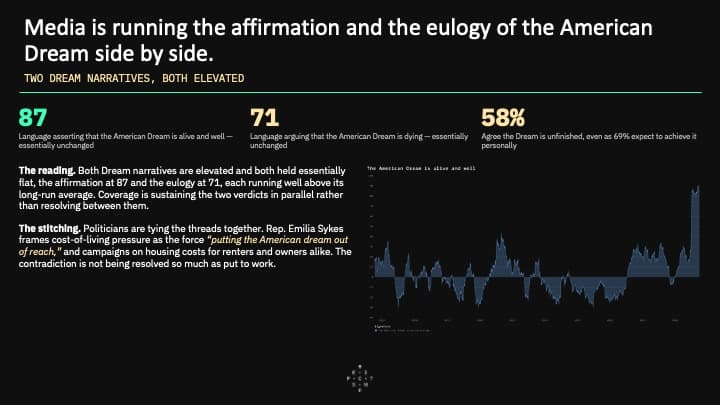
- Media is sustaining contradictory verdicts on the American Dream without reconciling them, holding the affirmation and the eulogy at elevated density simultaneously. Survey data shows the same split, since Americans report personal optimism while doubting that opportunity is broadly available. Communications anchored to geography or generational poverty face a thinner market this quarter and will need re-bridging into merit and mobility vocabulary.
Last updated: ...