
A Republic if You Can Keep It Pulse
The Pulse
October 5, 2026·A Republic if You Can Keep It Pulse

Executive Summary
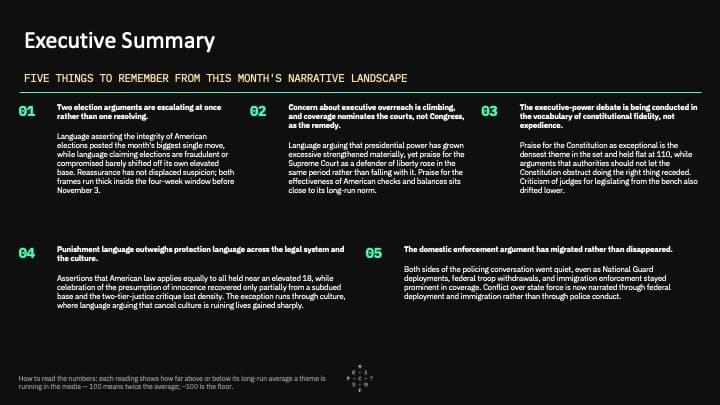
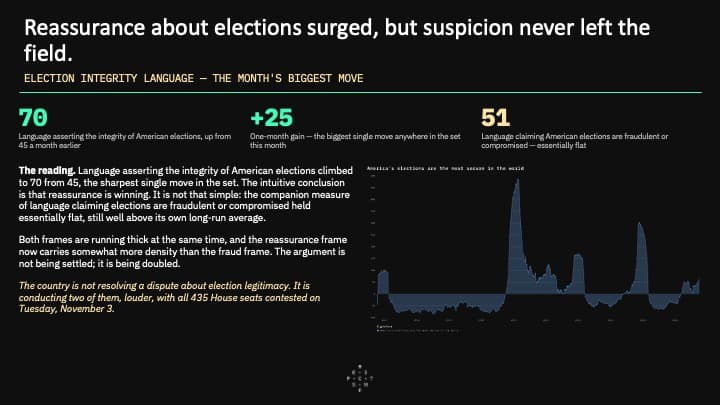
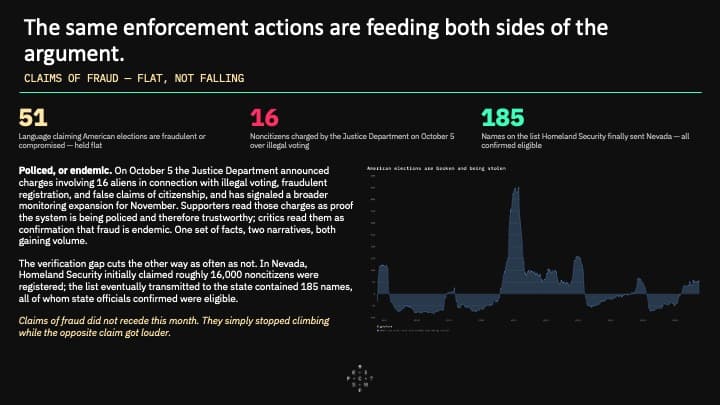
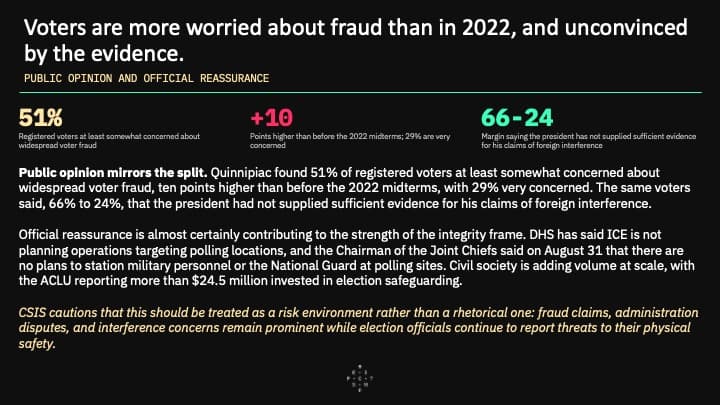
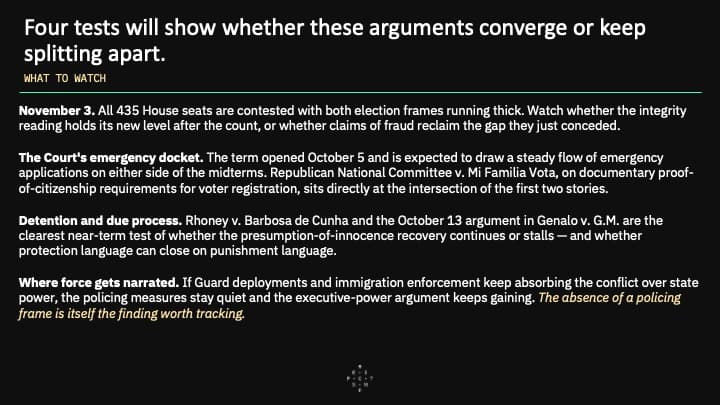
- Two election arguments are escalating at once rather than one resolving. Perscient's semantic signature measuring assertions of American election integrity posted the largest single movement anywhere in the tracked set, yet the companion signature tracking claims of fraud and compromise barely moved off its own elevated base. Reassurance has not displaced suspicion; both frames are running thick simultaneously inside the four-week window before November 3, and the same federal enforcement actions are being read by one side as proof the system is policed and by the other as proof fraud is endemic.
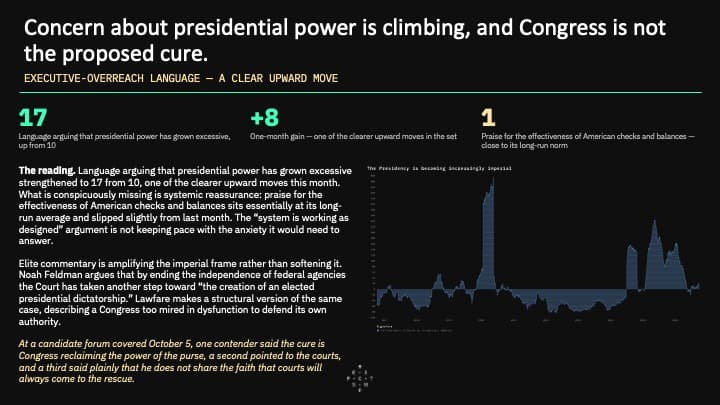
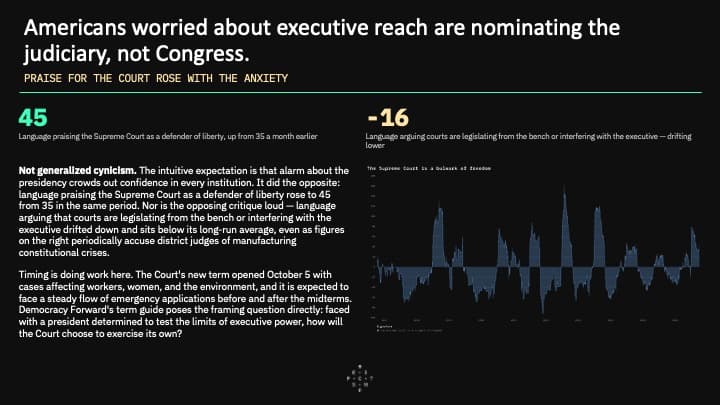
- Concern about executive overreach is climbing, and coverage is nominating the courts — not Congress — as the remedy.Our signature tracking language arguing that presidential power has grown excessive strengthened materially, but praise for the Supreme Court as a defender of liberty rose in the same period rather than falling with it. Meanwhile, language celebrating the effectiveness of American checks and balances remains close to its long-run norm, so the "system is working as designed" reassurance is not keeping pace with the anxiety it would need to answer.
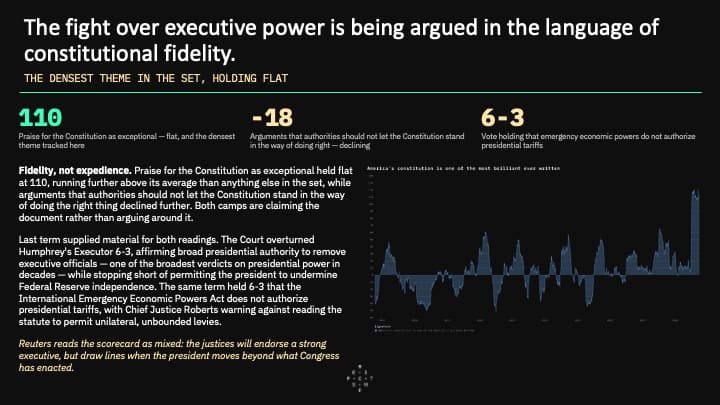
- The executive-power debate is being conducted in the vocabulary of constitutional fidelity rather than expedience. Praise for the Constitution as exceptional is the densest signature we track and held flat, while arguments that authorities should not let the Constitution obstruct doing the right thing receded. Criticism of judges for legislating from the bench also drifted lower, which leaves the judiciary carrying an unusual load in media framing: it is being asked to arbitrate election rules, detention policy, and the limits of the presidency at the same moment.
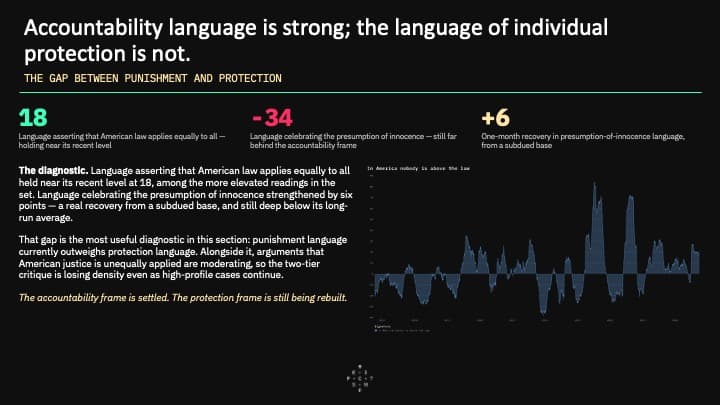
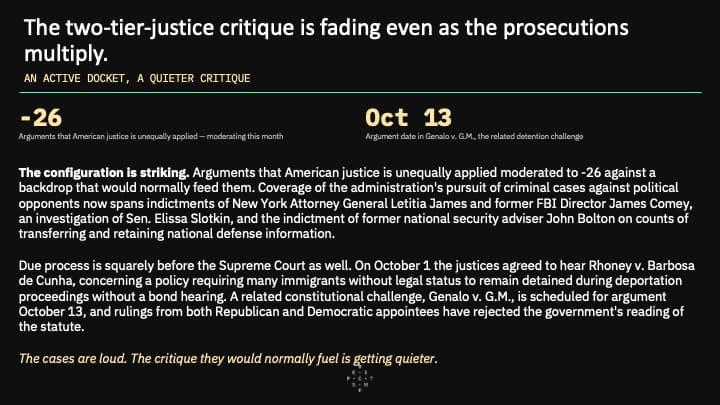
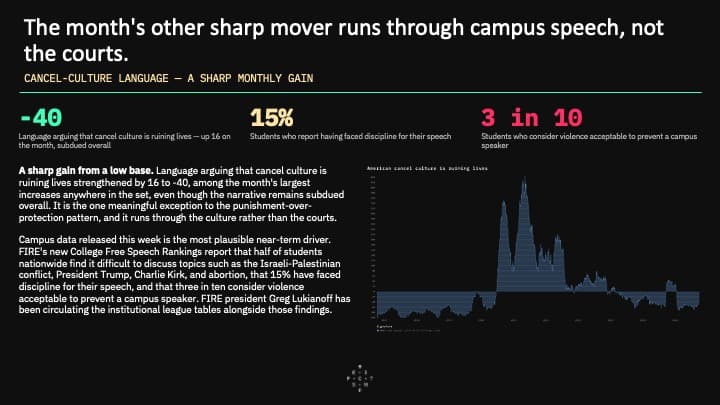
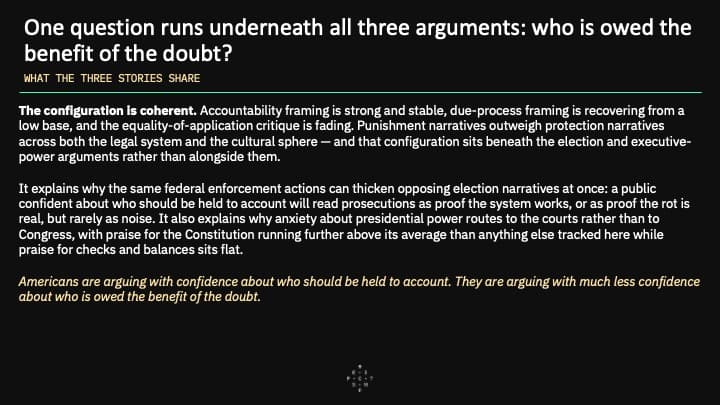
- Punishment language outweighs protection language across both the legal system and the cultural sphere. Assertions that American law applies equally to all held near an elevated level, while celebration of the presumption of innocence recovered only partially from a subdued base, and the two-tier-justice critique lost density even amid a steady stream of high-profile prosecutions and detention cases. The one meaningful exception runs through culture, where language arguing that cancel culture is ruining lives registered the second-largest monthly increase in the file, most plausibly driven by newly released campus speech data.
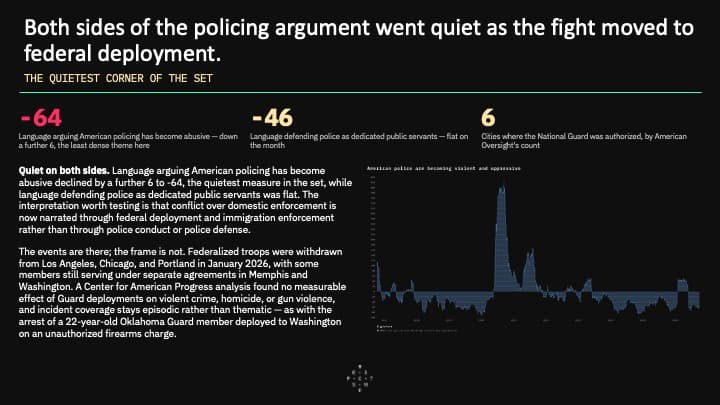
- The domestic enforcement argument has migrated rather than disappeared. Both sides of the policing conversation went quiet — criticism of abusive policing is the least dense signature in our set, and defense of police as public servants was flat — even as National Guard deployments, federal troop withdrawals, and immigration enforcement remain prominent in coverage. The implication worth testing is that conflict over state force is now narrated through federal deployment and immigration rather than through police conduct, which in turn feeds the same executive-power and due-process arguments running through the other two sections.
Last updated: ...