
Home of the Brave Pulse
The Pulse
October 5, 2026·Home of the Brave Pulse

Executive Summary
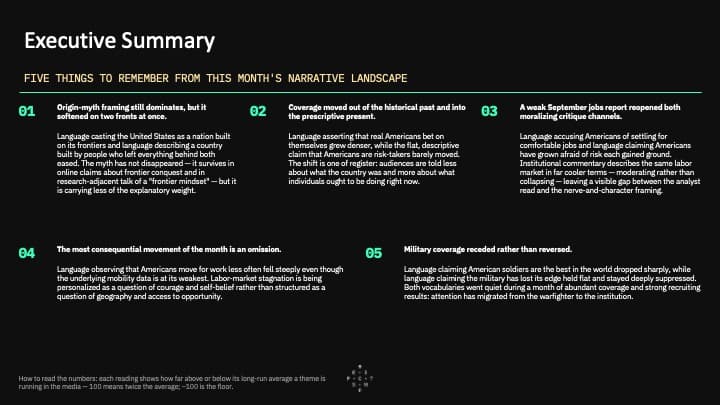
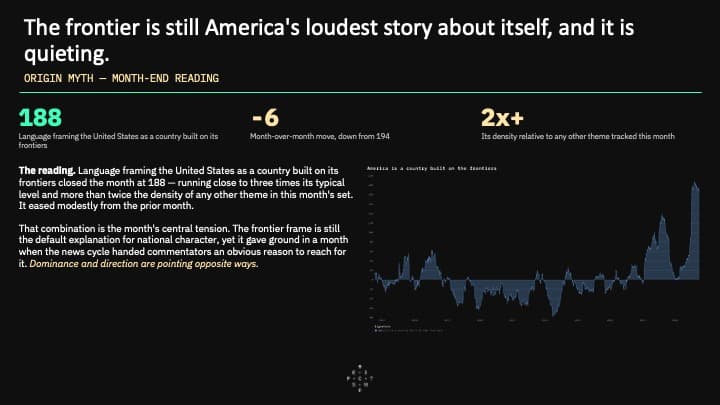
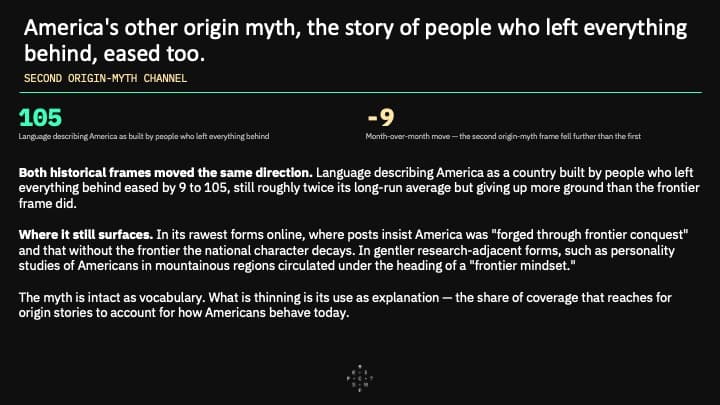
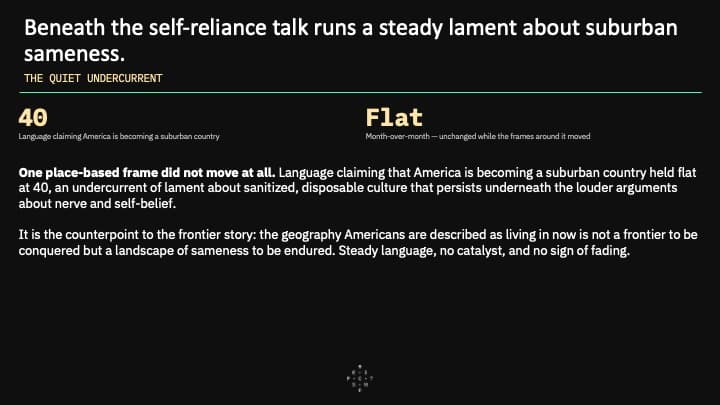
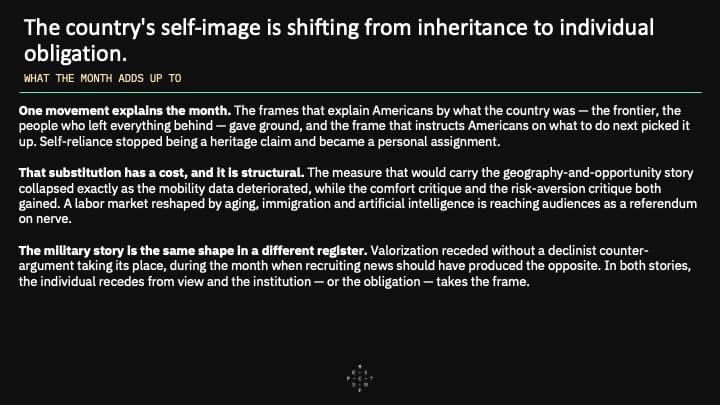
- Origin-myth framing remains the dominant way American media explains national character, but it softened this quarter on two fronts at once: language casting the United States as a nation built on its frontiers and language describing a country built by people who left everything behind both eased. The myth has not disappeared — it survives in online claims about frontier conquest and in research-adjacent coverage of a "frontier mindset" — but it is carrying less of the explanatory weight than it did.
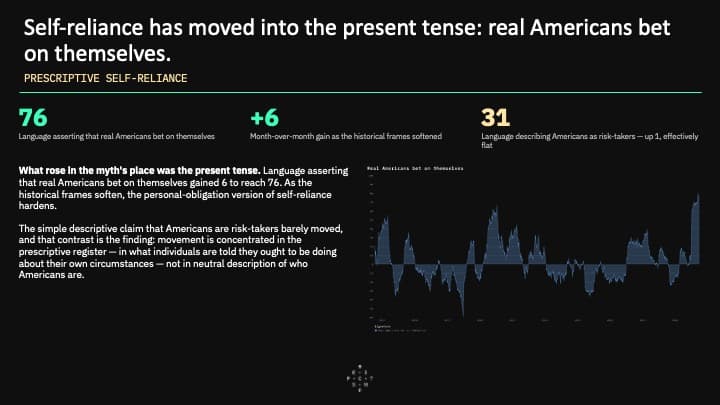
- In its place, coverage has moved from the historical past into the prescriptive present. Perscient's semantic signature tracking the density of language asserting that real Americans bet on themselves grew denser, while the flat, descriptive claim that Americans are risk-takers barely moved. The shift is one of register: audiences are being told less about what the country was and more about what individuals ought to be doing right now.
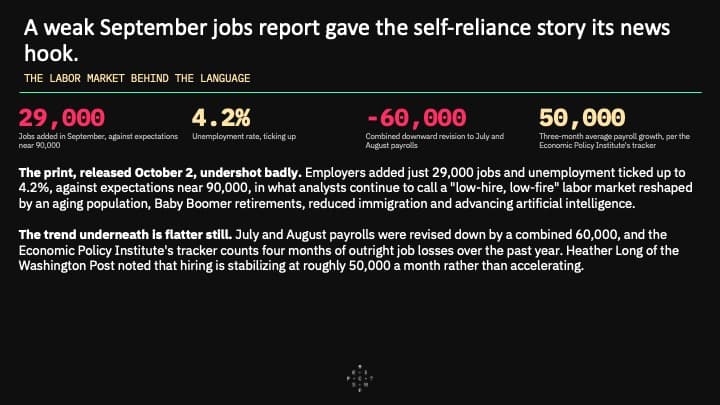
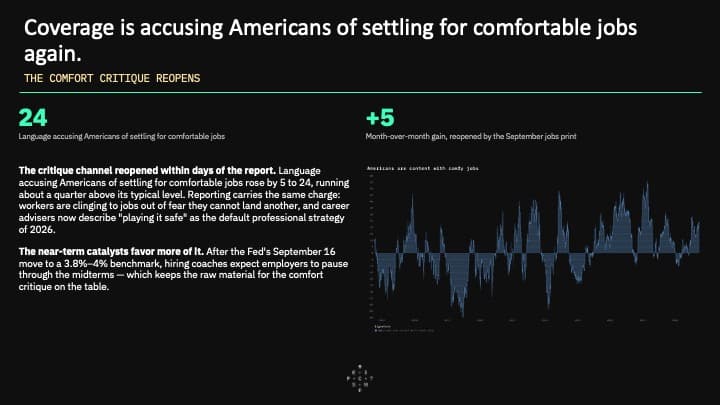
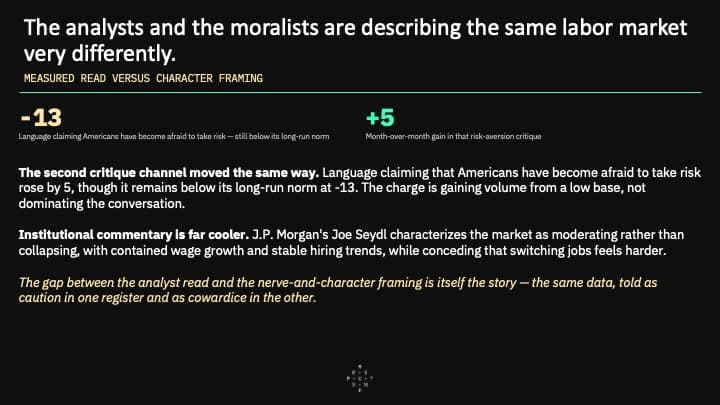
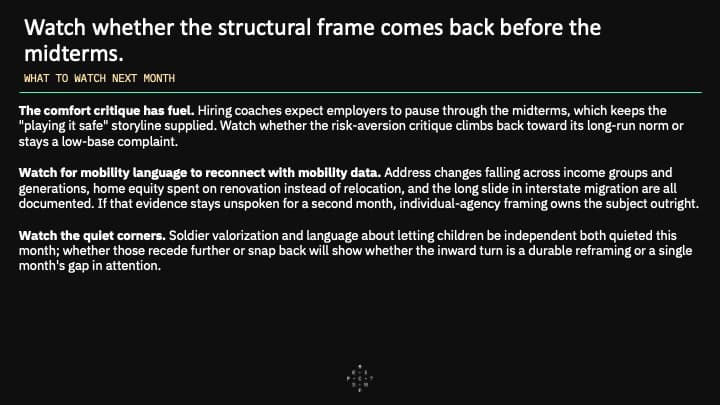
- A weak September jobs report reopened both moralizing critique channels, with language accusing Americans of settling for comfortable jobs and language claiming that Americans have grown afraid of risk each gaining ground. Institutional commentary describes the same labor market in far cooler terms — moderating rather than collapsing — which leaves a visible gap between the measured analyst read and the nerve-and-character framing reaching general audiences.
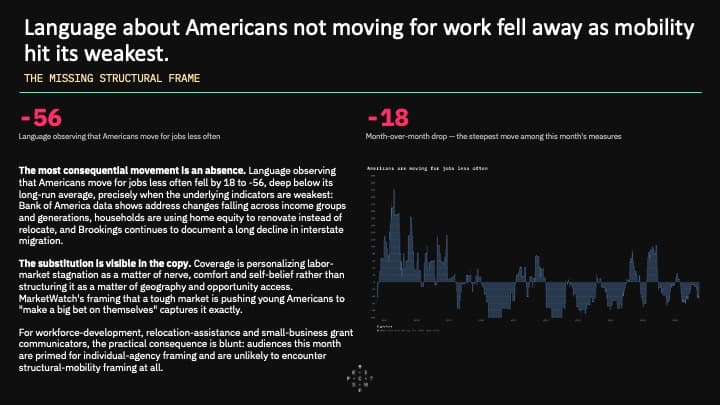
- The most consequential movement is an omission. Language observing that Americans move for work less often posted the file's steepest decline even though the underlying mobility data is at its weakest, meaning that labor-market stagnation is being personalized as a question of courage and self-belief rather than structured as a question of geography and access to opportunity. Communicators in workforce development, relocation assistance and small-business funding should expect audiences primed for individual-agency framing and almost entirely unexposed to structural-mobility framing.
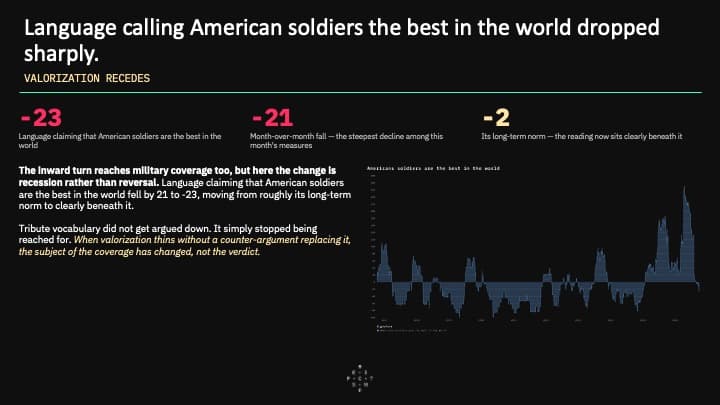
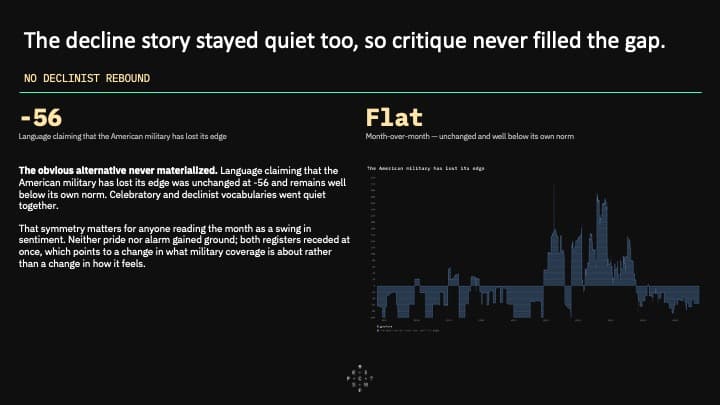
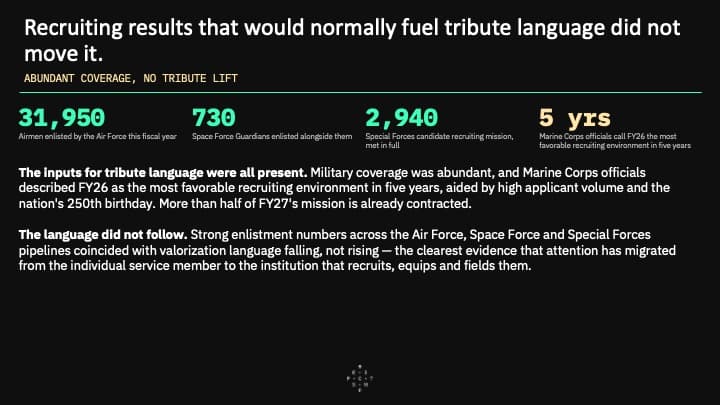
- The same inward turn reaches military coverage, where the change is recession rather than reversal. Language claiming that American soldiers are the best in the world recorded the file's sharpest single-month drop, while language claiming that the military has lost its edge held flat and stayed deeply suppressed. Celebratory and declinist vocabularies went quiet together, and they did so during a month of abundant coverage and strong recruiting results that would ordinarily have fueled tribute language — suggesting that attention has migrated from the warfighter to the institution.
Last updated: ...