America The Beautiful Pulse
The Pulse
October 5, 2026·America the Beautiful Pulse
Executive Summary
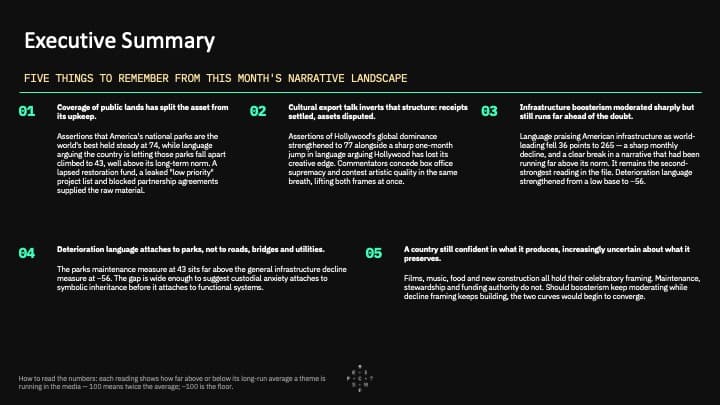
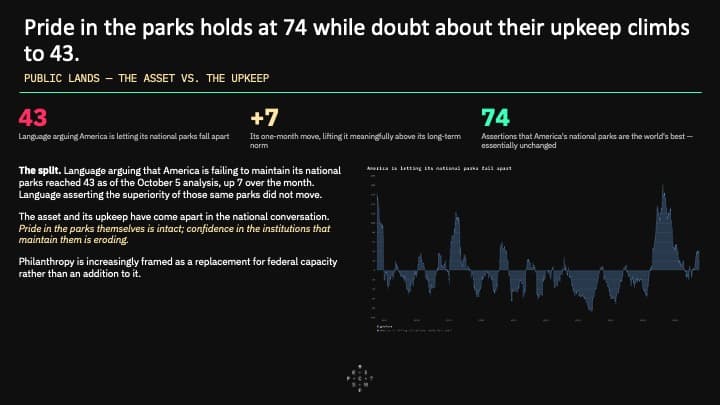
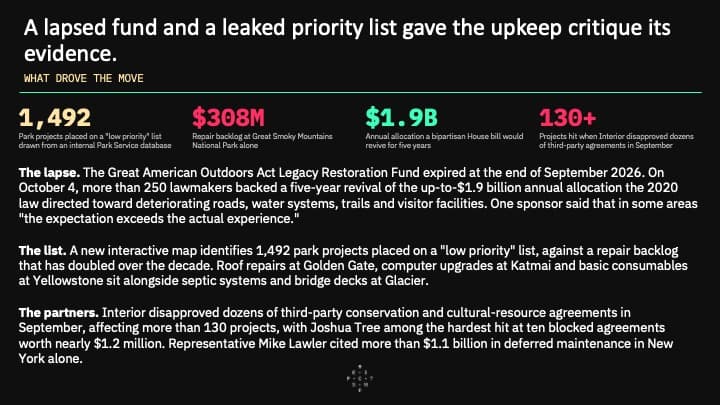
- Coverage of public lands has split the asset from its upkeep. Perscient's semantic signature tracking claims of national park superiority held steady while the signature tracking language arguing that America is failing to maintain those parks climbed well above its long-term norm. The lapse of the Great American Outdoors Act Legacy Restoration Fund, a leaked "low priority" project list, and blocked third-party partnership agreements supplied the raw material, and philanthropy is increasingly being framed as a replacement for federal capacity rather than an addition to it.
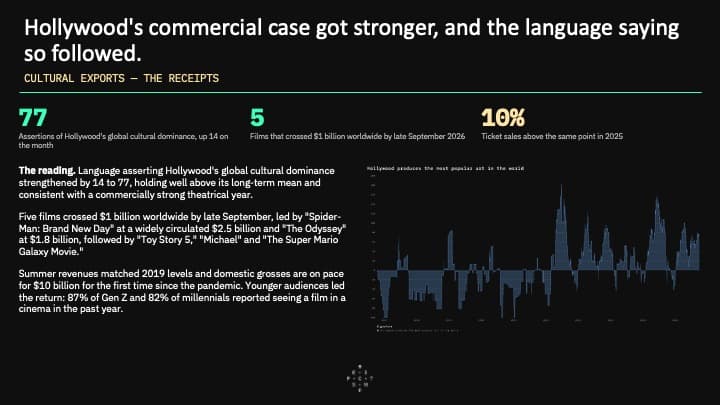
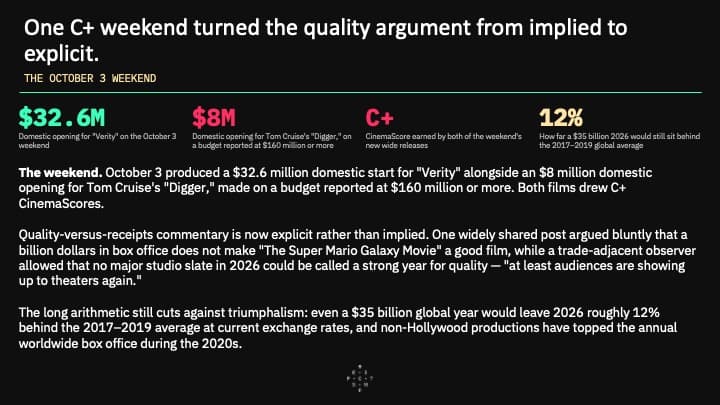
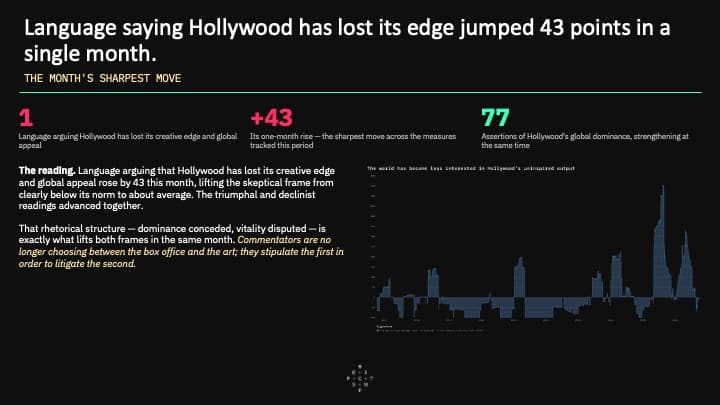
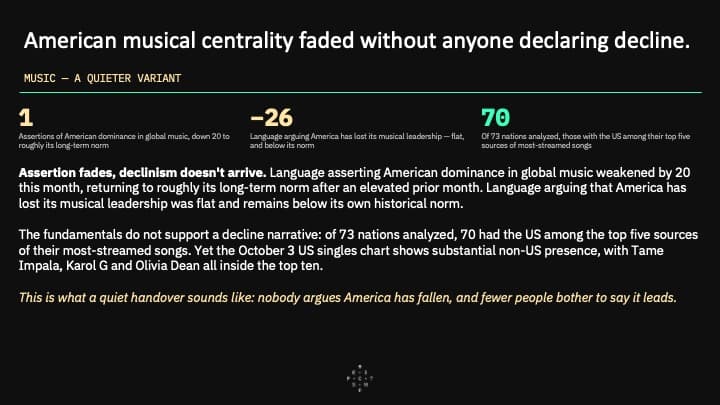
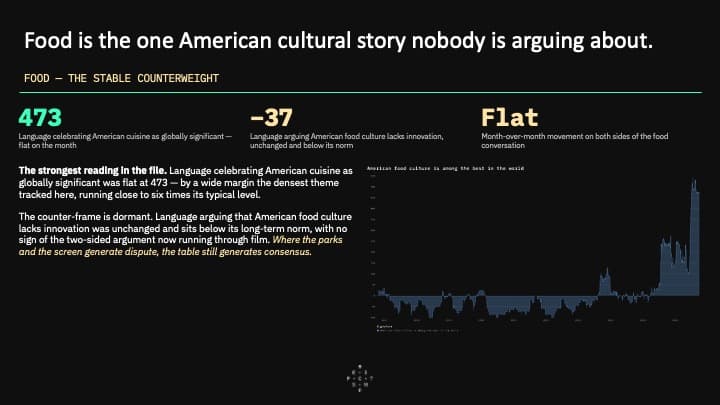
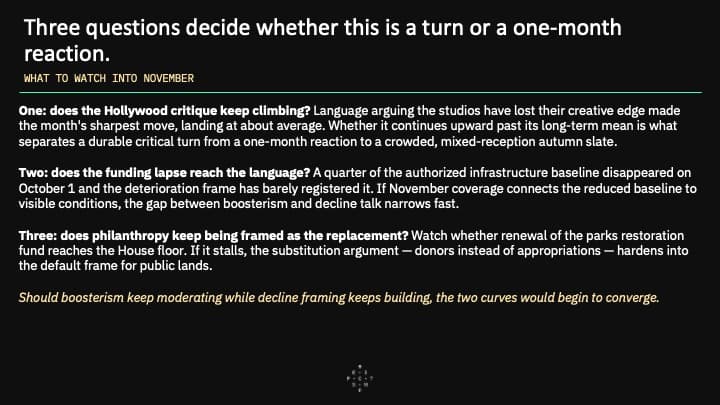
- Cultural export commentary inverted that structure: the receipts are settled and the assets are disputed. Our signature tracking assertions of Hollywood's global dominance strengthened alongside a sharp one-month jump in the signature arguing that Hollywood has lost its creative edge, the largest movement in the file. Commentators now concede box office supremacy and contest artistic quality in the same breath, a rhetorical pattern that lifts both frames at once. Music showed a quieter variant, where assertion of American centrality faded without any matching rise in declinist language, and food culture remained the single most confident narrative tracked.
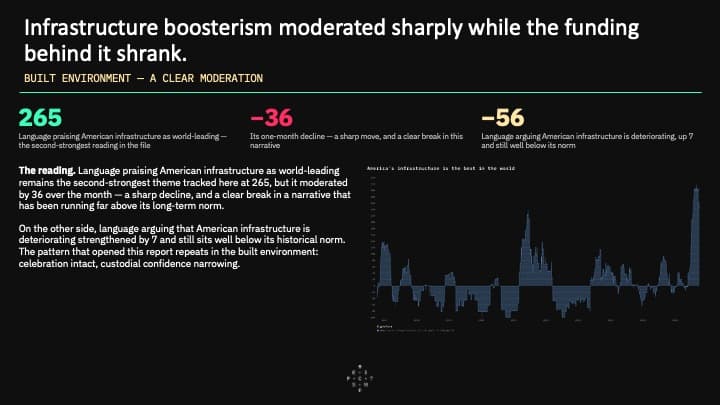
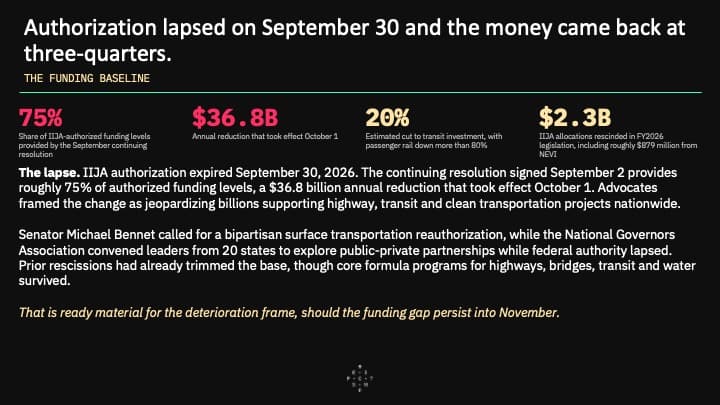
- Infrastructure boosterism recorded its largest single-month decline, though it remains the second-strongest signature in the file, while the deterioration frame strengthened from a low base. The expiration of IIJA authorization and a continuing resolution funding roughly three-quarters of authorized levels sit uneasily beneath continued "building again" messaging from DOT and defense-adjacent grant announcements.
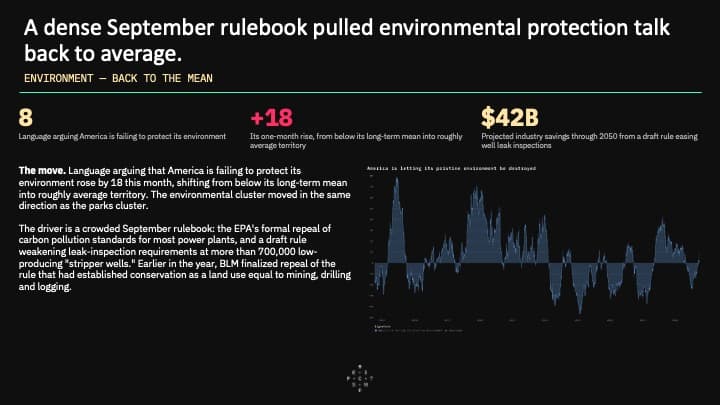
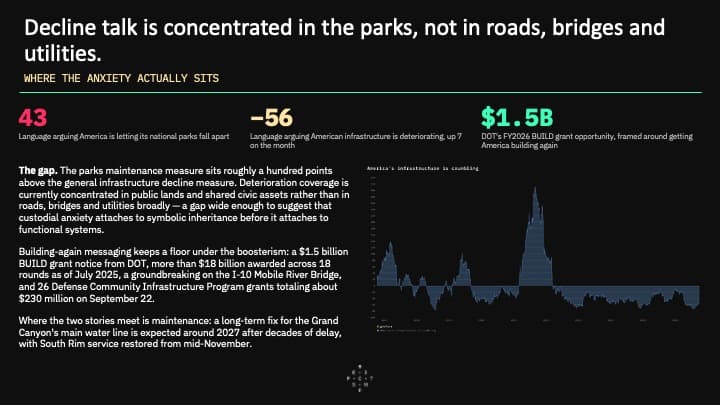
- Across the public lands and infrastructure sections, deterioration language is concentrated in parks and shared civic assets rather than in roads, bridges and utilities, a gap wide enough to suggest that custodial anxiety attaches to symbolic inheritance before it attaches to functional systems.
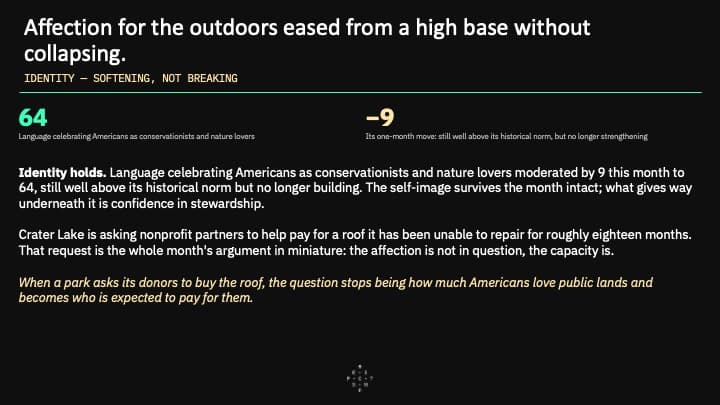
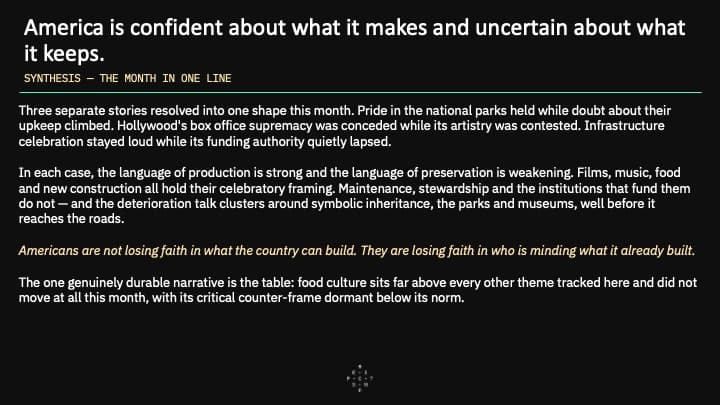
- Taken together, the quarter's narratives describe a country still confident in what it produces, whether films, music, food or new construction, and increasingly uncertain about what it preserves. Should boosterism keep moderating while decline framing keeps building, the two curves would converge for the first time in the series.
Last updated: ...