Parties and Elections Pulse
The Pulse
October 7, 2026·Parties & Elections Pulse




Executive Summary
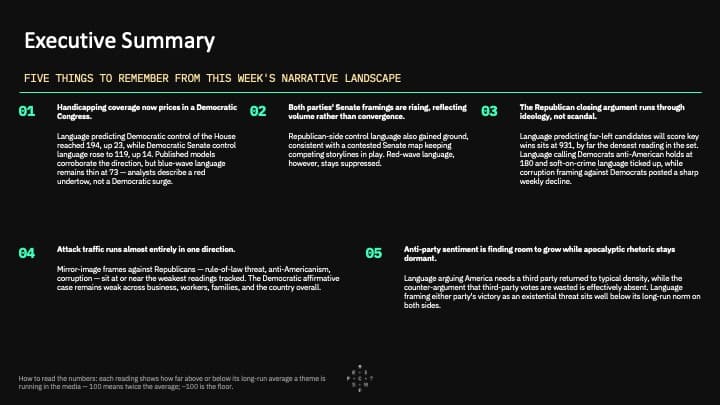
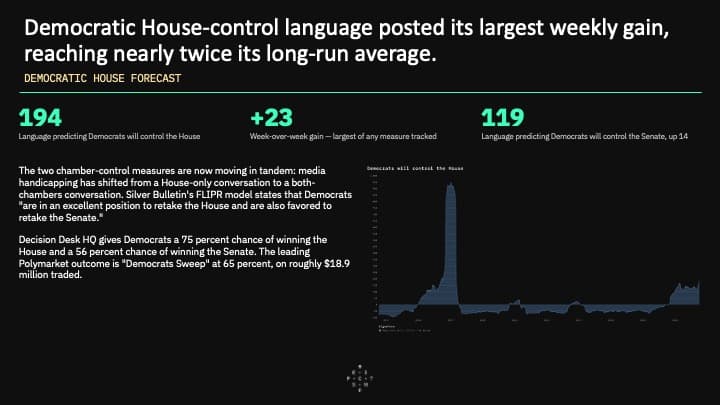
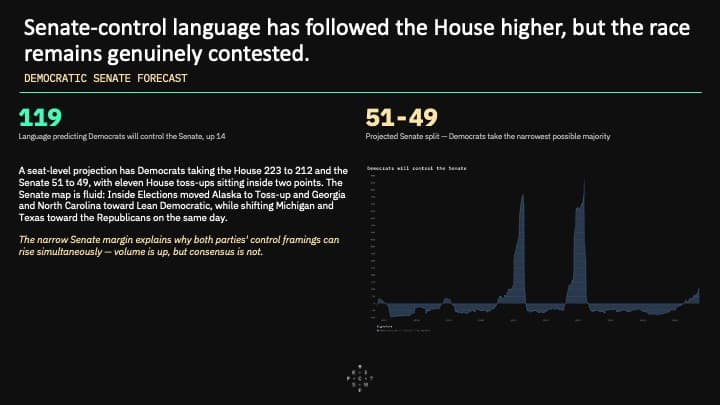
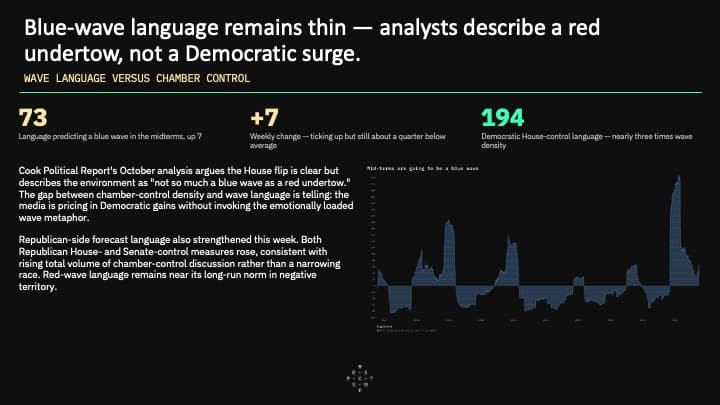
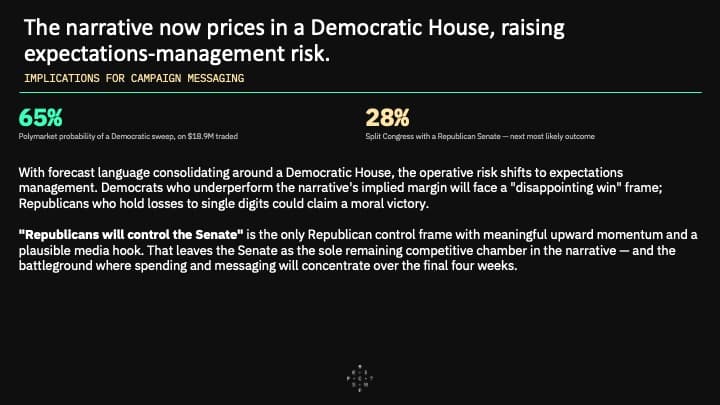
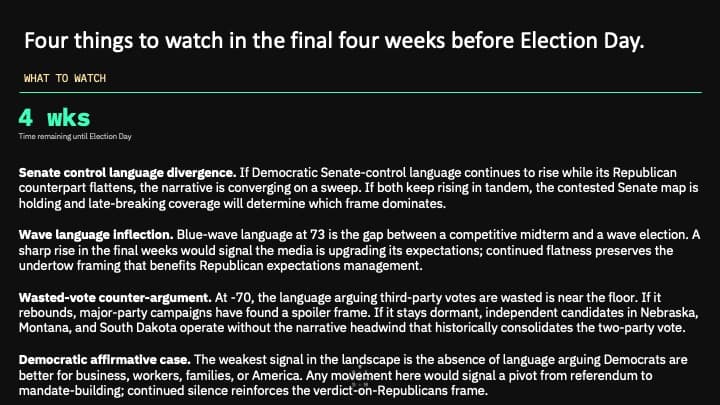
- Handicapping coverage has widened from one chamber to two. Perscient's semantic signatures tracking predictions of Democratic control of the House and of the Senate both strengthened this week, the House measure recording the largest weekly gain in our set. Published models agree, yet the coverage stops short of declaring a rout: language predicting a blue wave remains comparatively thin, and practitioners are describing the environment as a Republican undertow rather than a Democratic surge.
- Both parties' Senate framings are rising at once, which reflects volume rather than convergence. Republican-side control signatures also gained ground, consistent with a contested Senate map that keeps competing storylines in circulation. That leaves "Republicans hold the Senate" as the single Republican control frame with momentum behind it, while red-wave language stays suppressed.
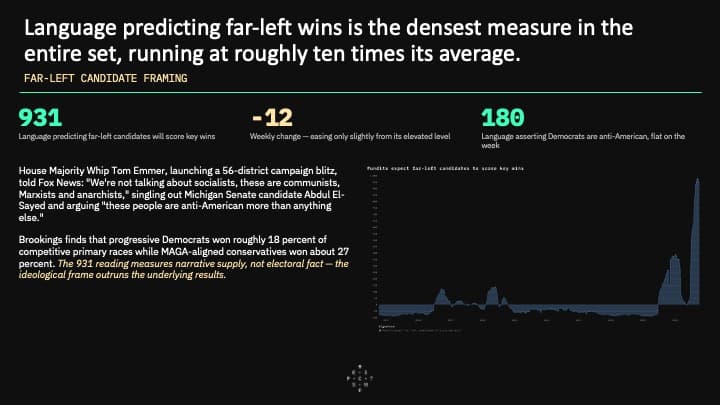
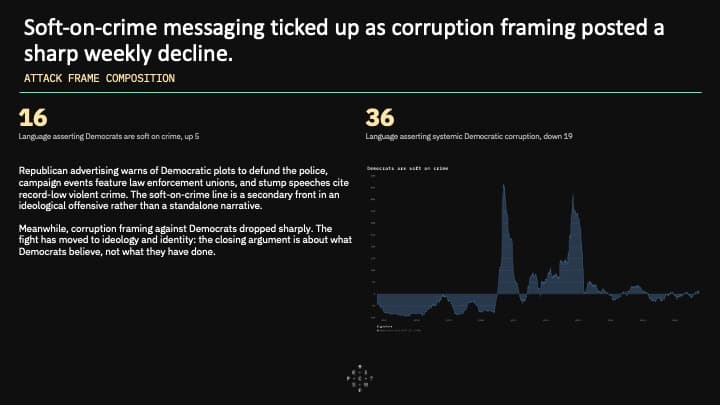
- The Republican closing argument is being fought on ideology rather than ethics. Our signature tracking predictions that far-left candidates will score key wins is by a wide margin the densest in our set, and language asserting that the Democratic Party is anti-American is holding firm, reinforced by a soft-on-crime line that ticked upward. Corruption framing against Democrats, meanwhile, posted the sharpest weekly decline in the file. Research on the primary record suggests that the ideological frame outruns the underlying results, so the density measures narrative supply, not electoral fact.
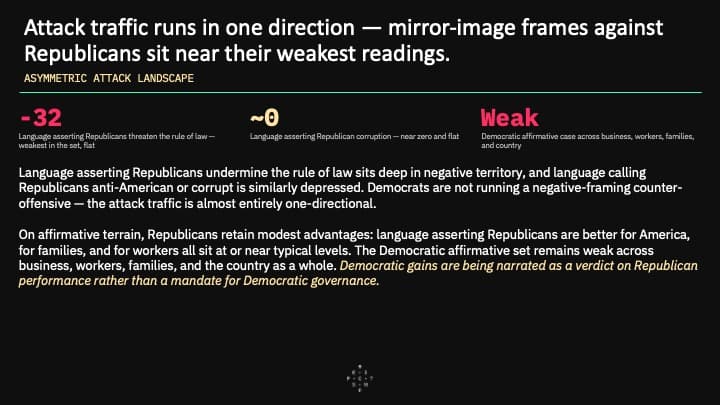
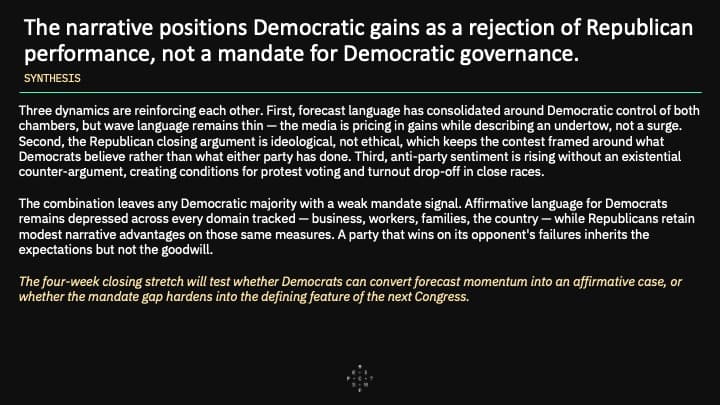
- The attack traffic runs almost entirely in one direction. Mirror-image frames against Republicans — rule-of-law threat, anti-Americanism, corruption — sit at or near the weakest readings we track. Combined with a Democratic affirmative case that remains weak across business, workers, families, and the country overall, this positions any Democratic gains to be narrated as a verdict on Republican performance rather than a mandate for Democratic governance.
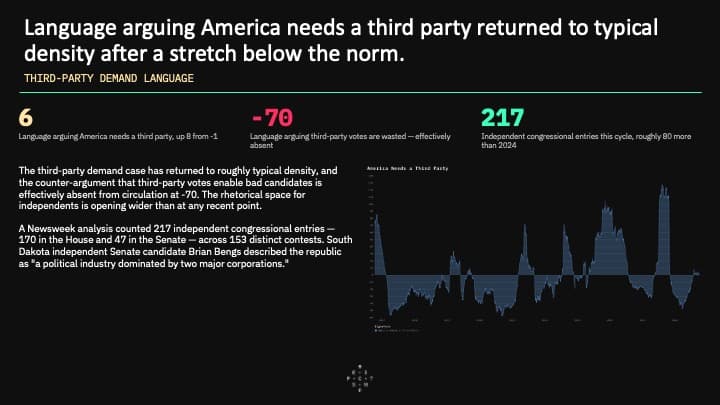
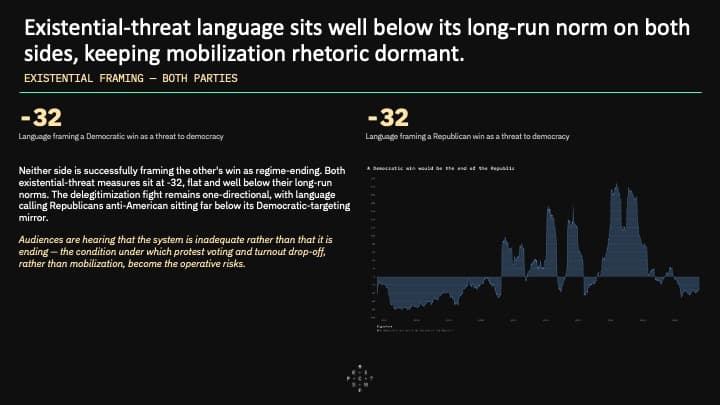
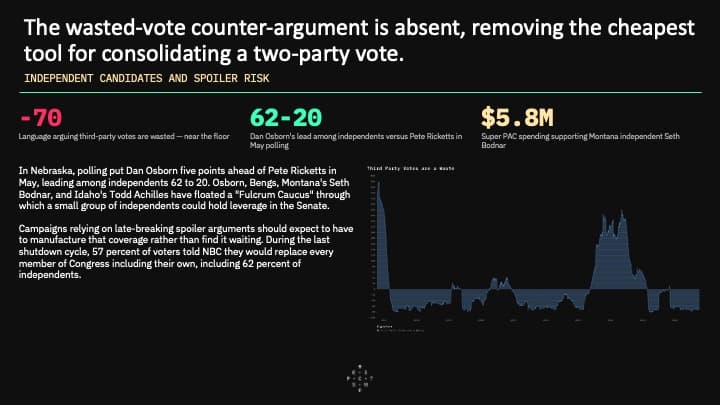
- Anti-party sentiment is finding room to grow while apocalyptic rhetoric stays dormant. Language arguing that America needs a third party returned to typical density after a stretch below the norm, and the counter-argument that third-party votes are wasted is effectively absent from circulation. At the same time, paired signatures framing either party's victory as an existential threat to democracy both sit well below their long-run norms. Audiences are hearing that the system is inadequate rather than that it is ending — the condition under which protest voting and turnout drop-off, rather than mobilization, become the operative risks, particularly in Senate races featuring credible independents.
Last updated: ...
Last updated: ...