Institutions Pulse
The Pulse
October 7, 2026·Institutions Pulse

Executive Summary
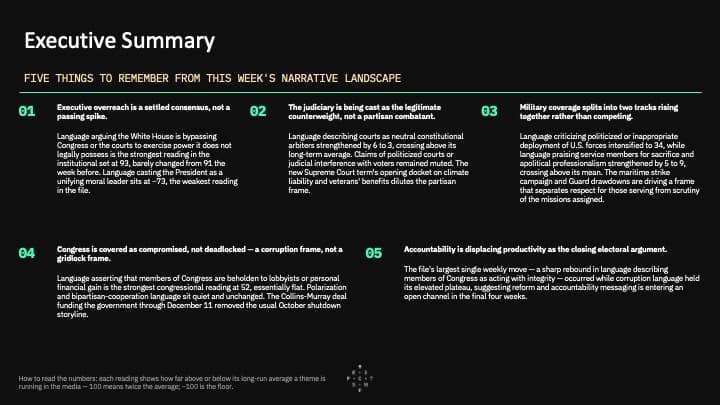
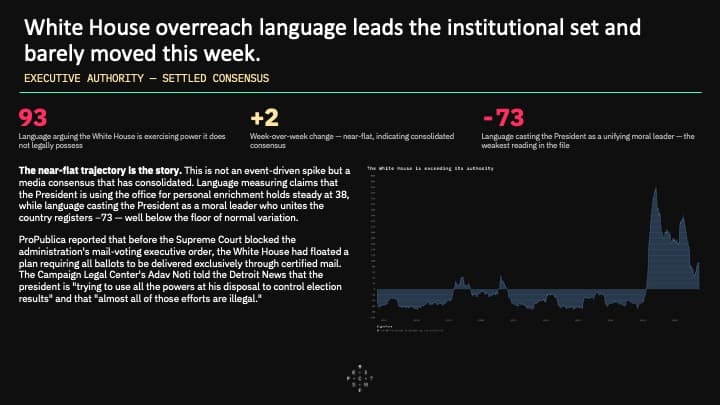
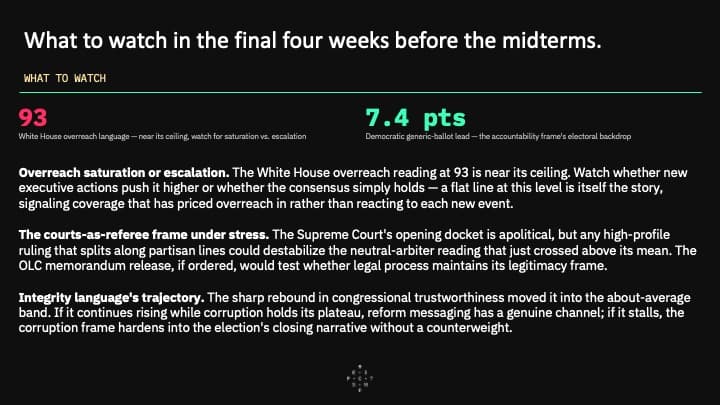
- Executive overreach is the settled frame, not a passing spike. Perscient's semantic signature tracking language that the White House is bypassing Congress or the courts to exercise power it does not legally possess is the strongest reading in the institutional set and barely moved week over week, indicating a consolidated media consensus rather than a reaction to a single event. Coverage of the blocked mail-voting executive order supplied the week's concrete illustration, and language casting the President as a unifying moral leader remains the weakest signature in the file.
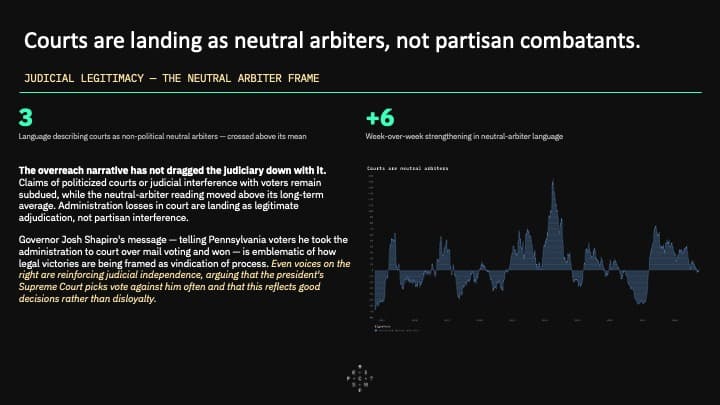
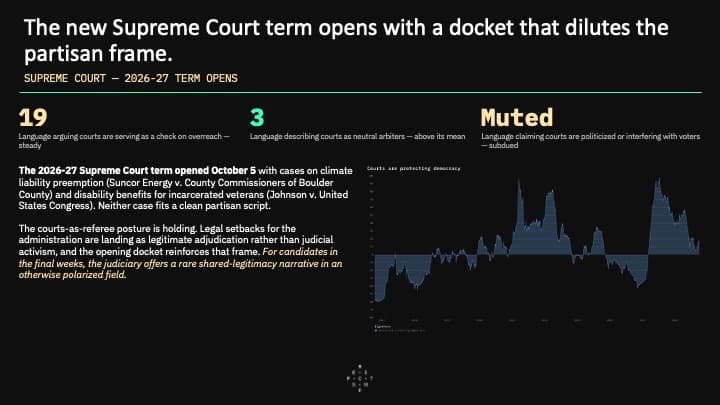
- The judiciary is being cast as the legitimate counterweight rather than another partisan combatant. Language describing courts as neutral constitutional arbiters strengthened and moved above its long-term average, while claims of politicized courts or judicial interference with voters stayed muted. The new Supreme Court term's opening docket on climate preemption and veterans' benefits dilutes the partisan read, so administration losses in court are landing as legitimate adjudication.
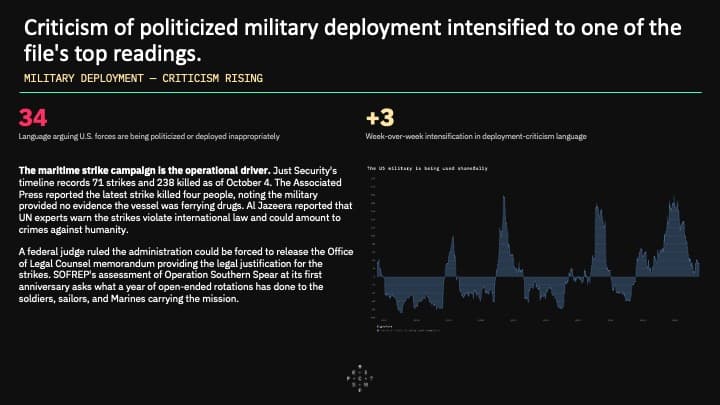
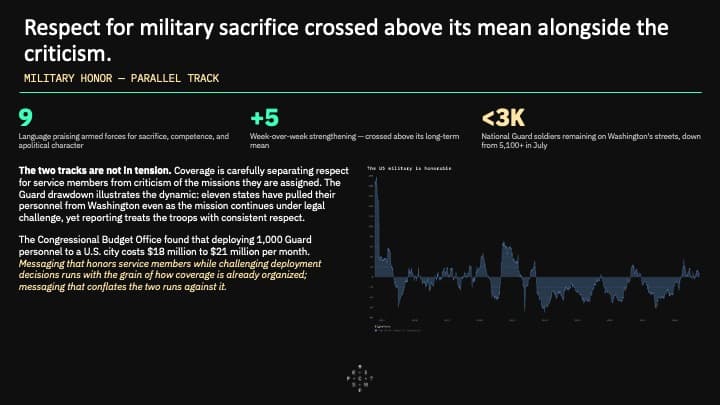
- Military coverage runs on two tracks that are rising together rather than competing. Language criticizing the politicized or inappropriate deployment of U.S. forces intensified alongside language praising service members for sacrifice and apolitical professionalism, which crossed above its mean. The maritime strike campaign, the legal fight over the Office of Legal Counsel memorandum, and the drawdown of Guard personnel in Washington are driving a frame that separates respect for those serving from scrutiny of the missions assigned to them.
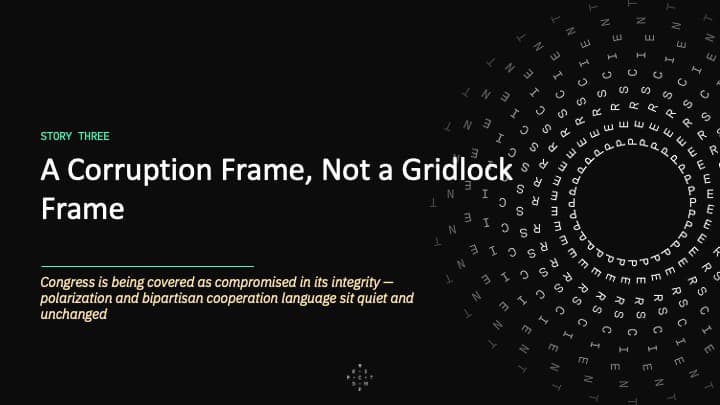
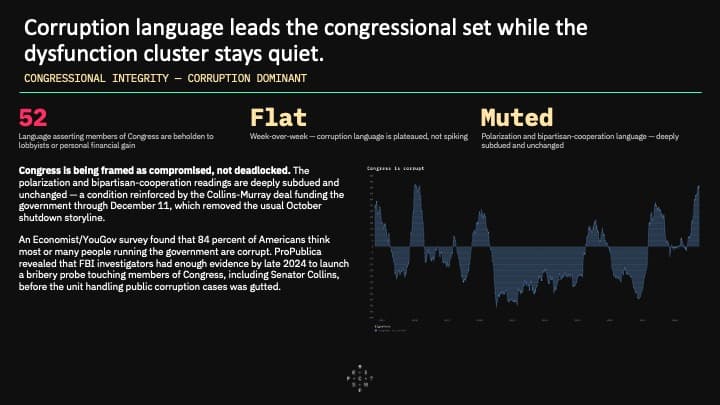
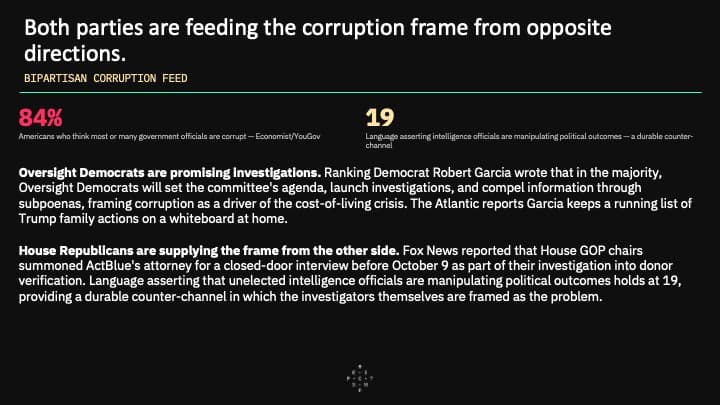
- Congress is covered as compromised, not deadlocked. Corruption language is the strongest congressional reading, while the familiar polarization and bipartisan-cooperation signatures sit quiet and unchanged — a condition reinforced by the Collins–Murray deal funding the government through December 11, which removed the usual October shutdown storyline. Both parties are feeding the integrity frame, through Oversight Democrats' planned profiteering investigations and House Republicans' ActBlue inquiry.
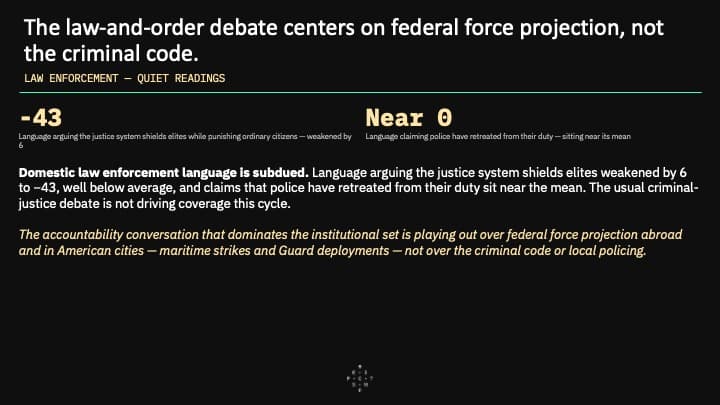
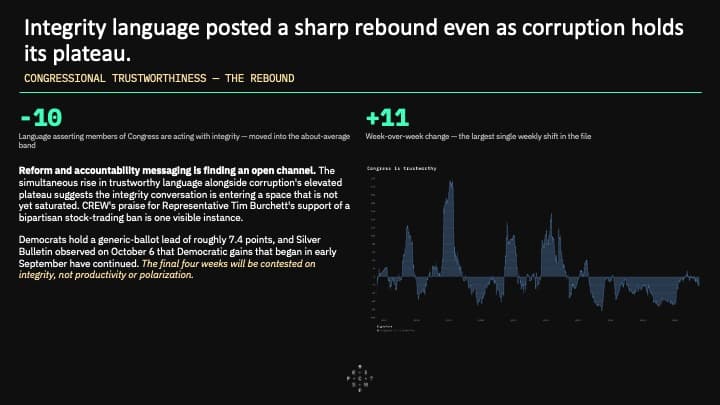
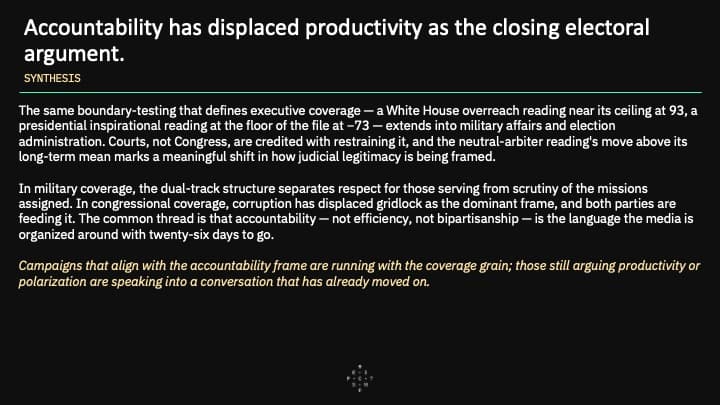
- Taken together, the sections show accountability displacing productivity as the closing electoral argument. The same boundary-testing that defines executive coverage extends into election administration, maritime strikes, and domestic Guard deployments, and it is the courts rather than Congress that are credited with restraining it. The file's largest single weekly move — a sharp rebound in language describing members of Congress as acting with integrity — occurred while corruption language held its elevated plateau, suggesting that reform and accountability messaging is entering an open channel in the final four weeks rather than a saturated one.
Last updated: ...