
Personal Finance May 28, 2026
The Pulse
June 3, 2026·0 comments·Money



Executive Summary
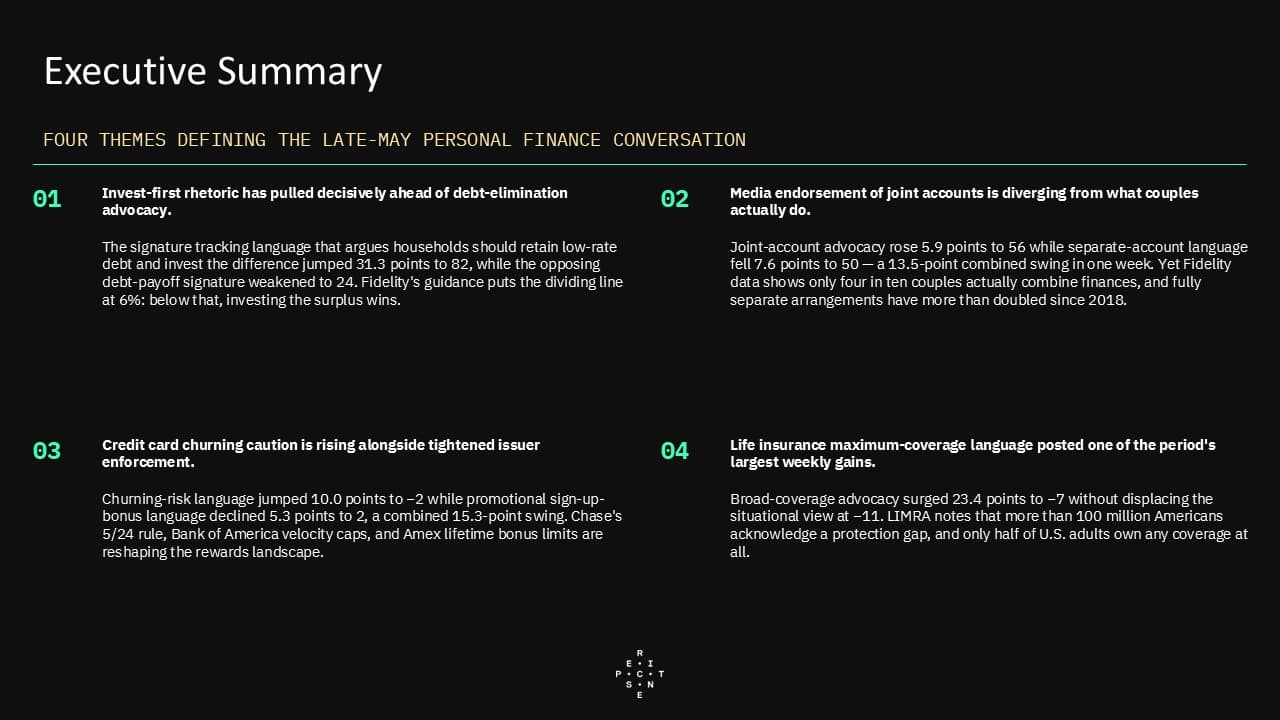
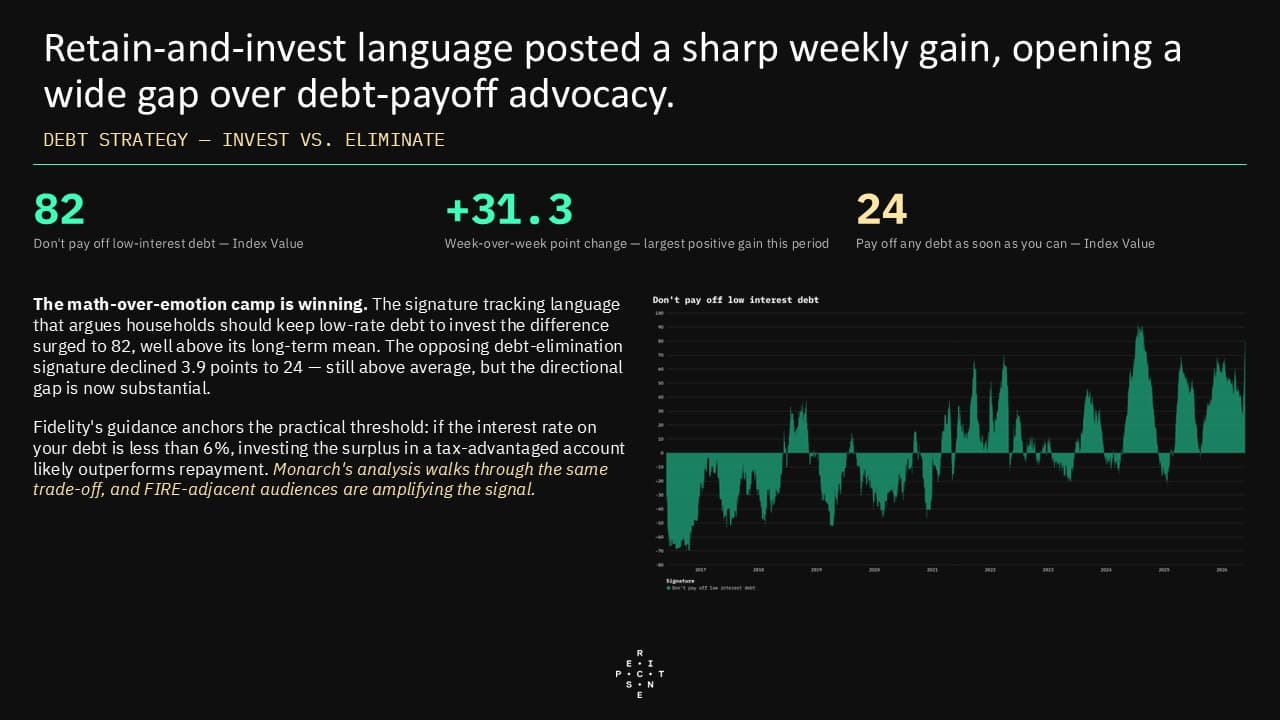
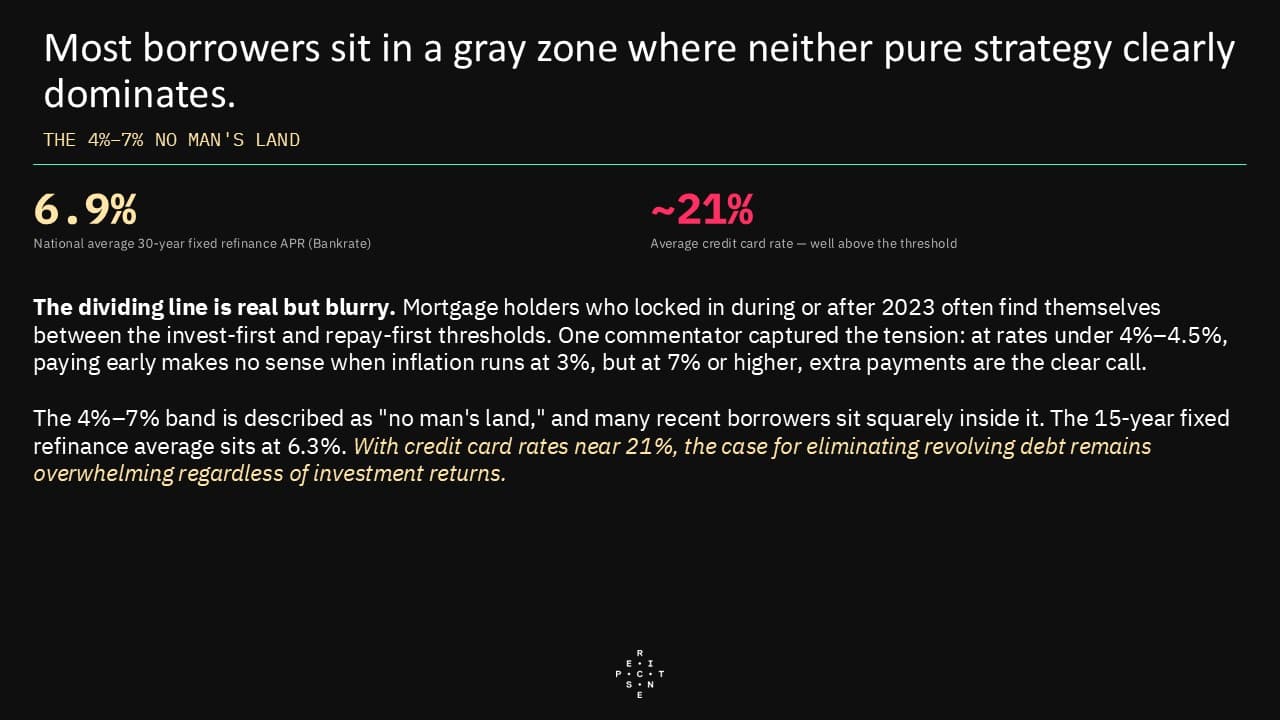
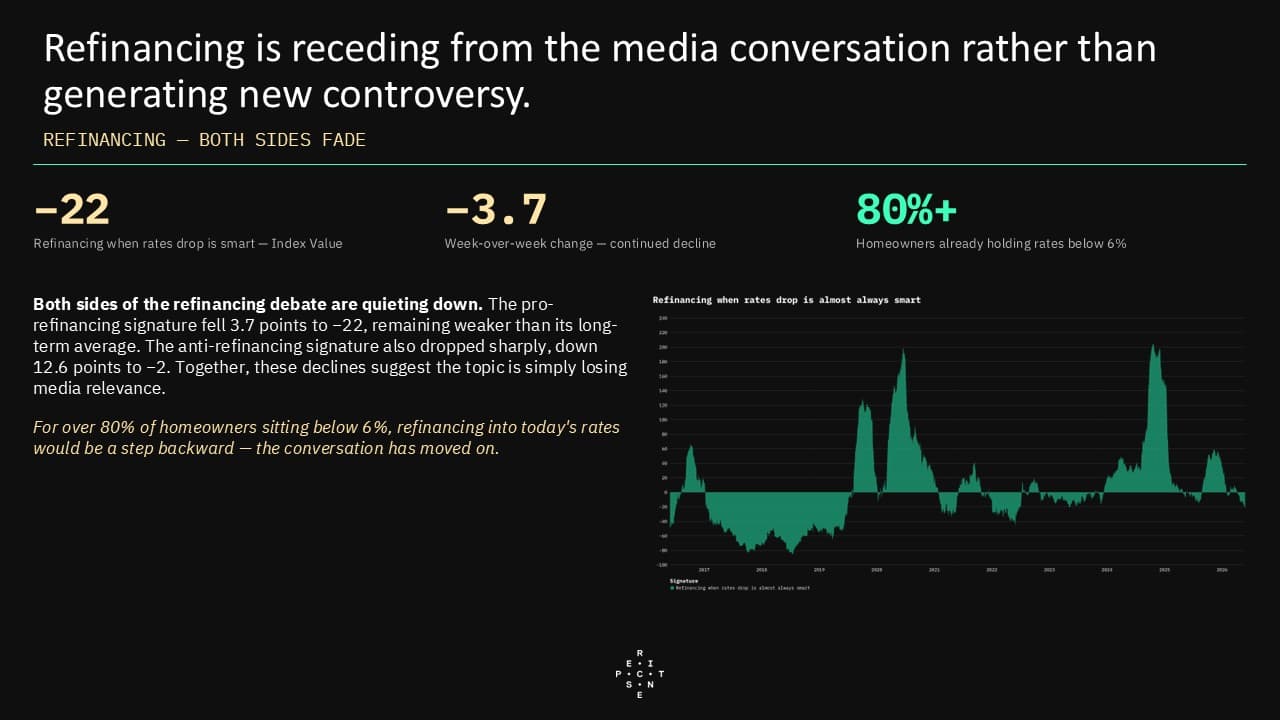
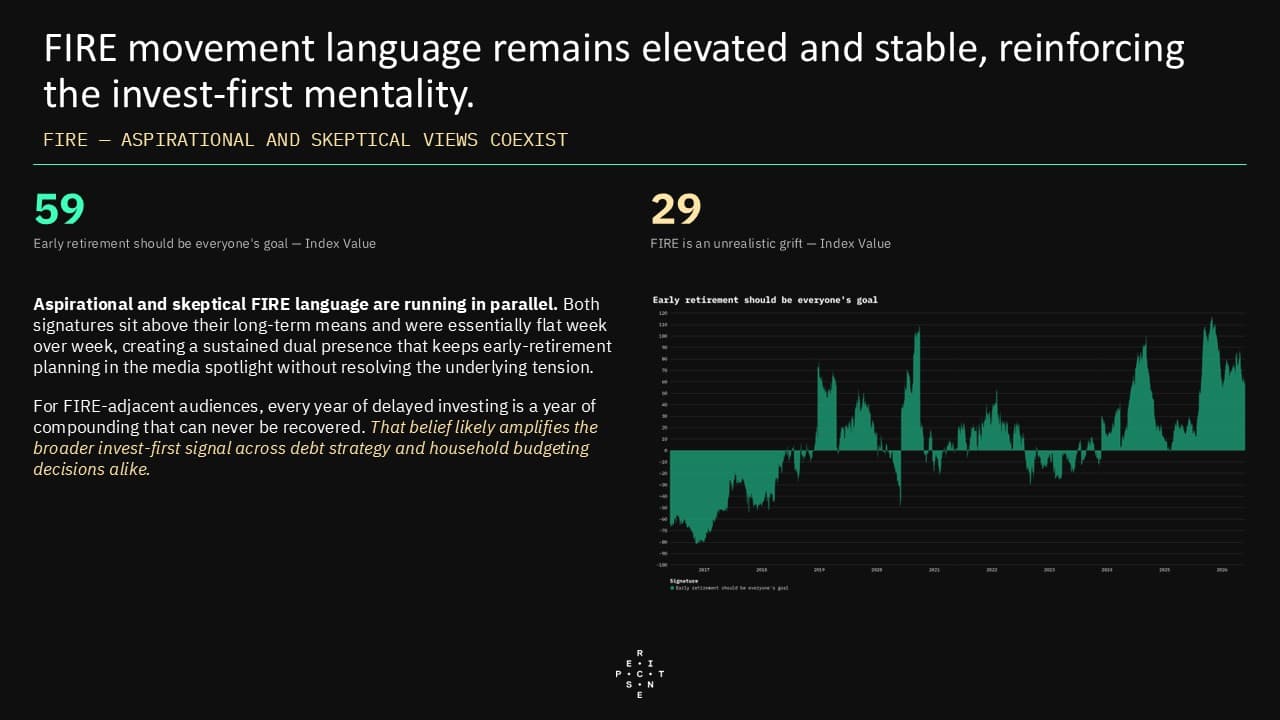
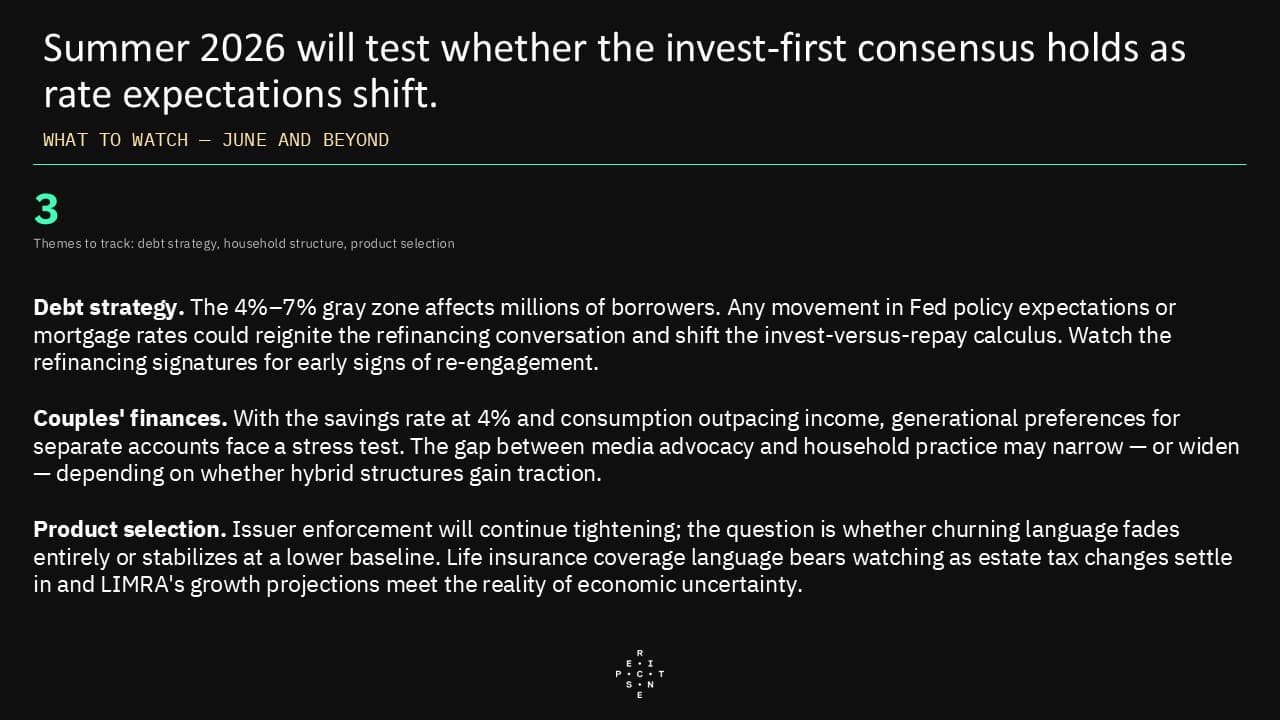
- Invest-first rhetoric has pulled decisively ahead of debt-elimination advocacy, and refinancing is fading from the conversation entirely. The semantic signature tracking language that argues households should retain low-rate debt and invest the difference posted its largest weekly gain and sits well above its long-term average, while the opposing debt-payoff signature weakened. Refinancing language continued to decline on both sides of the debate, reflecting the reality that over 80% of homeowners already hold rates below current market levels. The sustained strength of FIRE-movement language reinforces this tilt, because that community treats every year of delayed investing as an irreversible compounding cost.
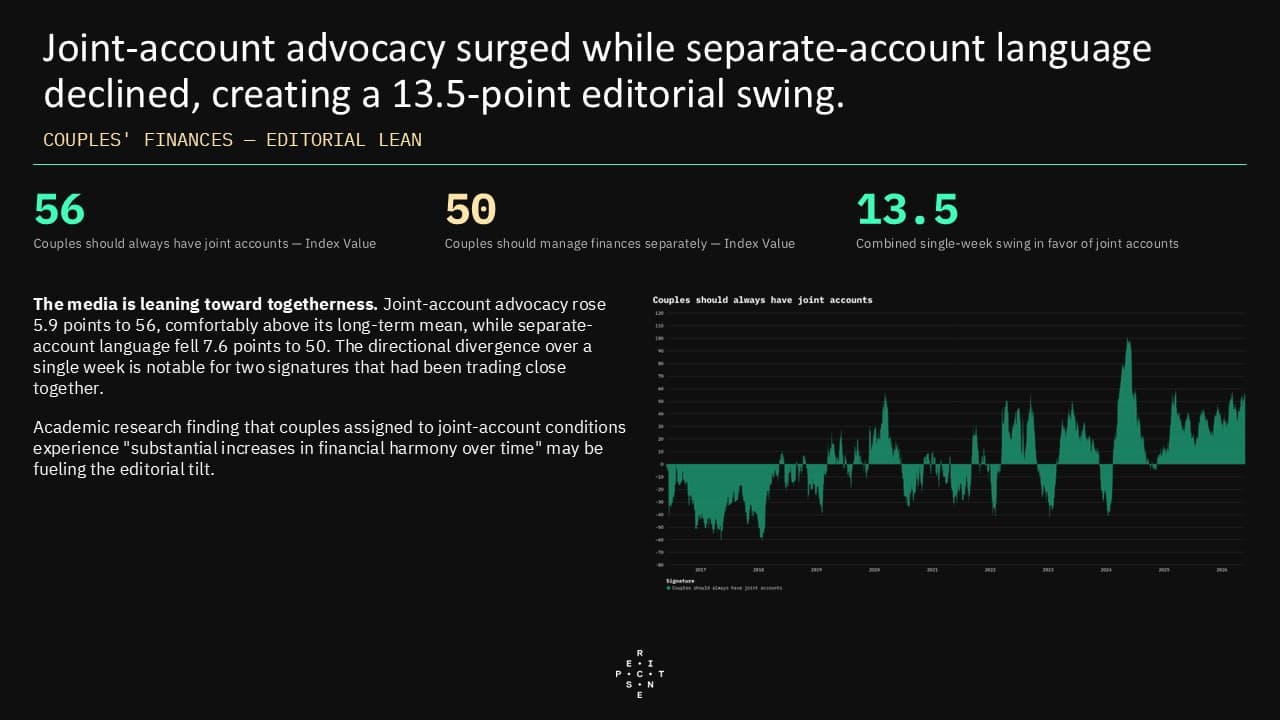
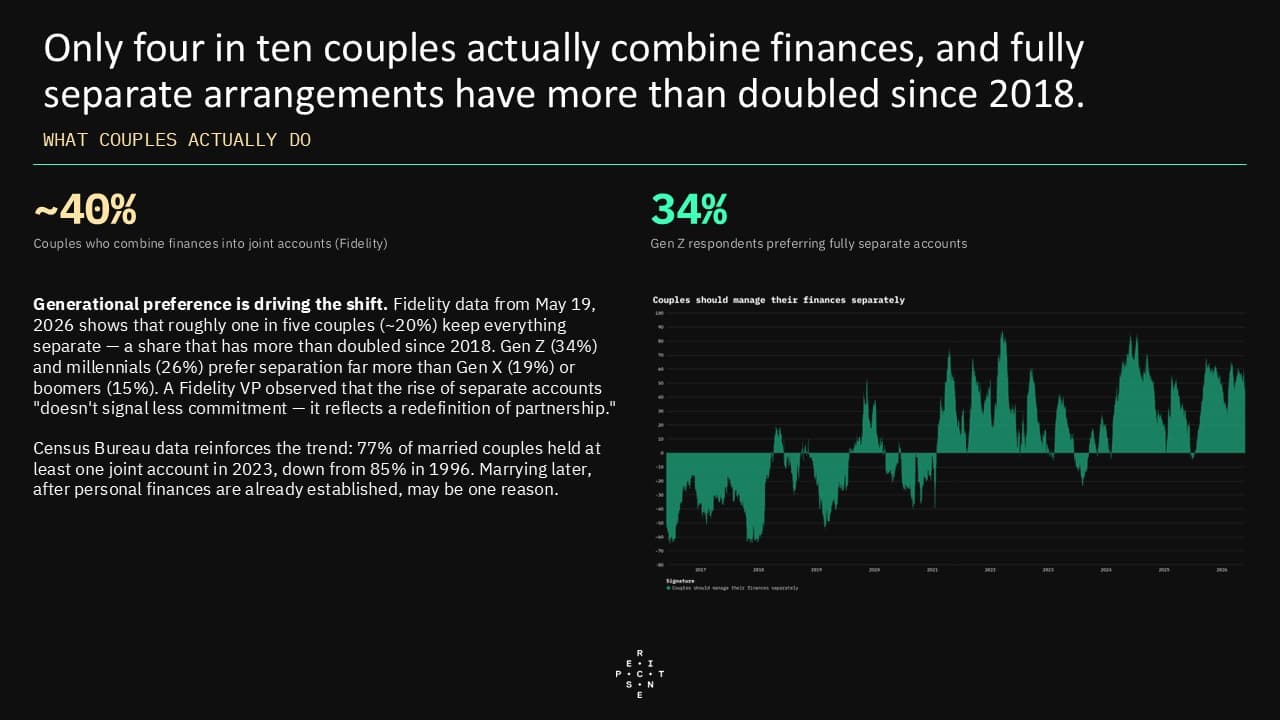
- Media endorsement of joint bank accounts is diverging from what couples actually do. Joint-account advocacy strengthened while separate-account language declined, creating a combined swing of more than 13 points in editorial tone over a single week. Yet survey data shows that only about four in ten couples actually combine finances, and that the share keeping accounts fully separate has more than doubled since 2018 — driven largely by younger generations who marry later and arrive with established financial identities. Financial planners bridging the two camps with hybrid "yours, mine, ours" structures suggest that the real variable is cash-flow visibility, not account labels.
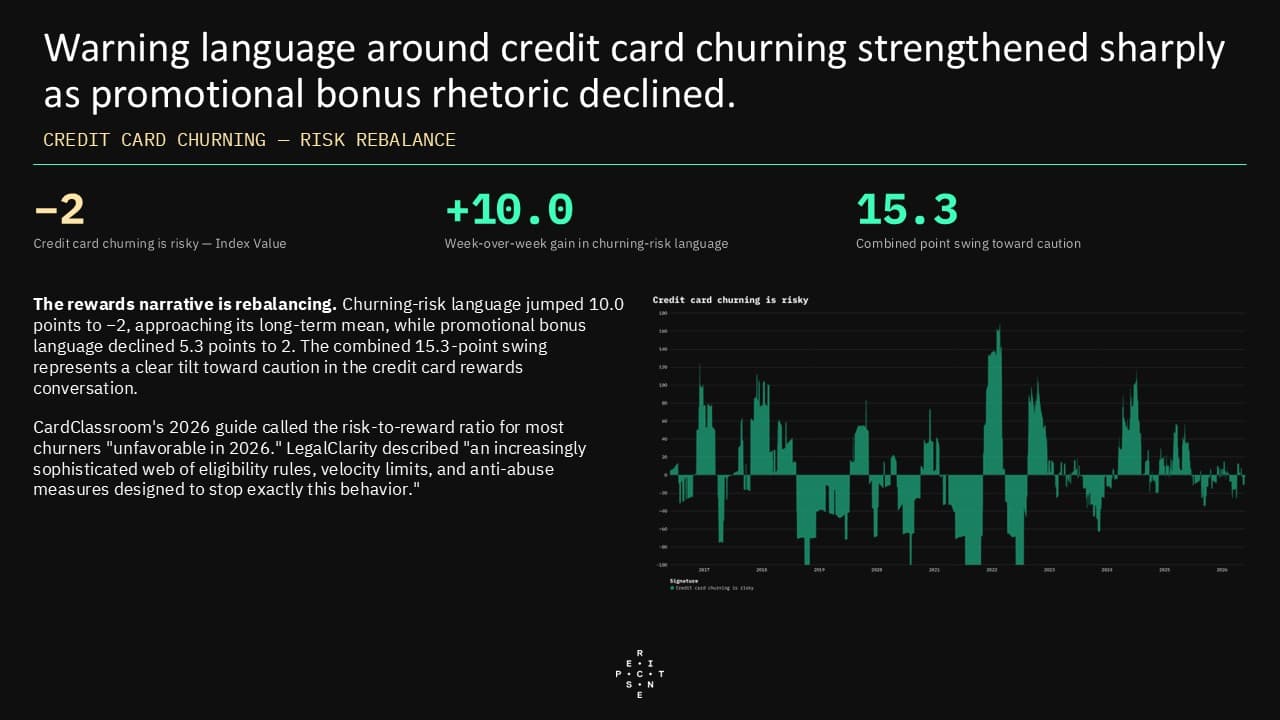
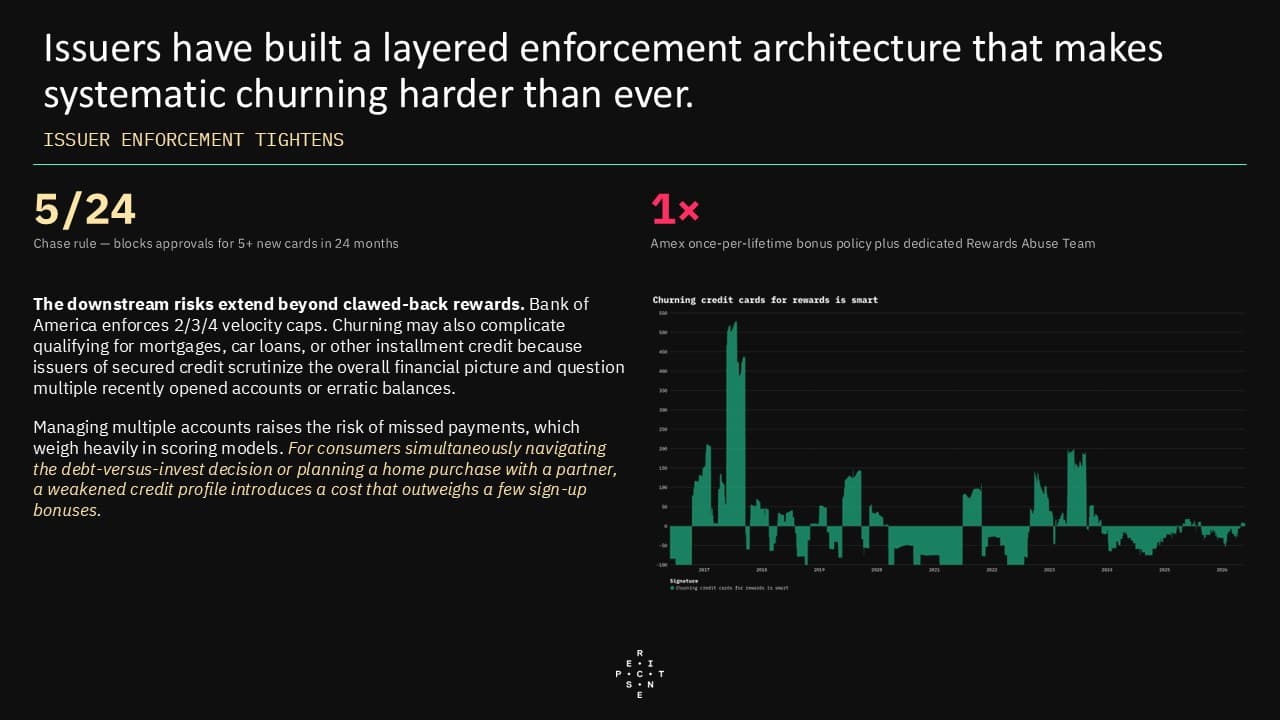
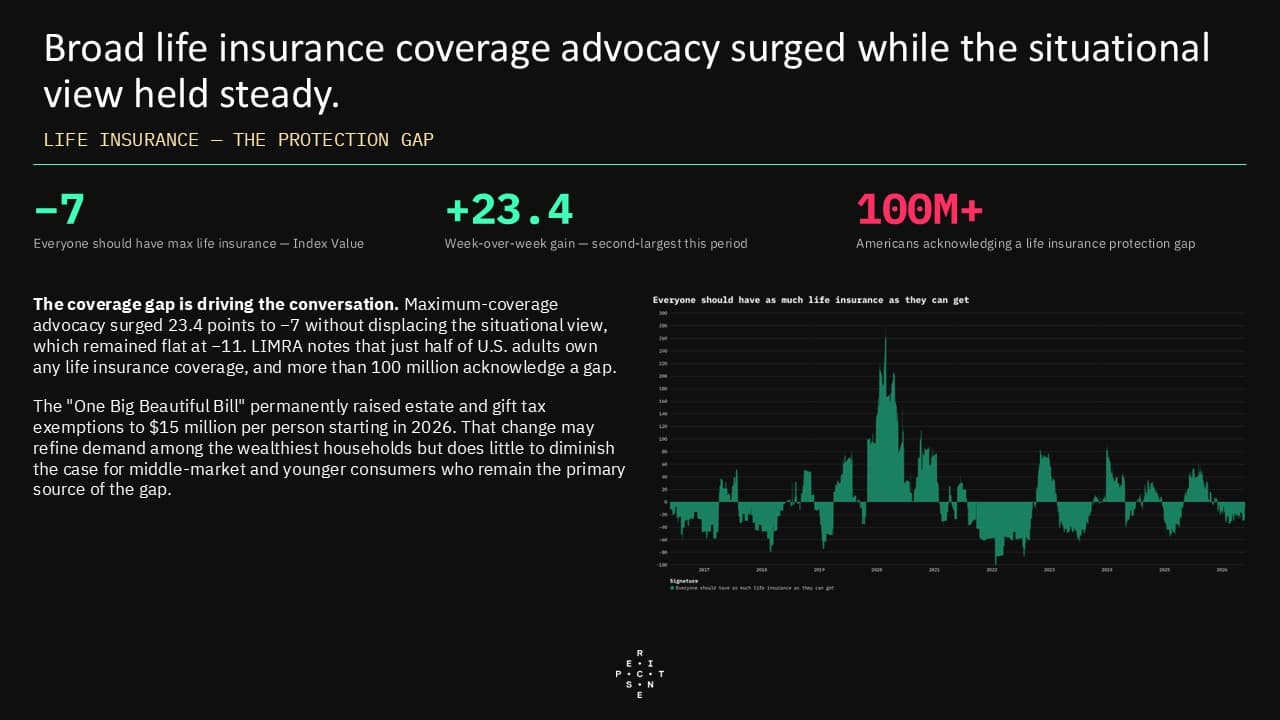
- Credit card churning caution is rising in tandem with tightened issuer enforcement, while life insurance maximum-coverage language posted one of the period's largest weekly gains. Warning language around churning's credit risks strengthened and promotional sign-up-bonus language declined, producing a clear rebalancing of the rewards conversation that mirrors issuers' own velocity limits, lifetime bonus restrictions, and dedicated abuse teams. Simultaneously, broad life-insurance-coverage advocacy surged upward without displacing the more situational view, consistent with industry data showing that more than 100 million Americans acknowledge a protection gap.
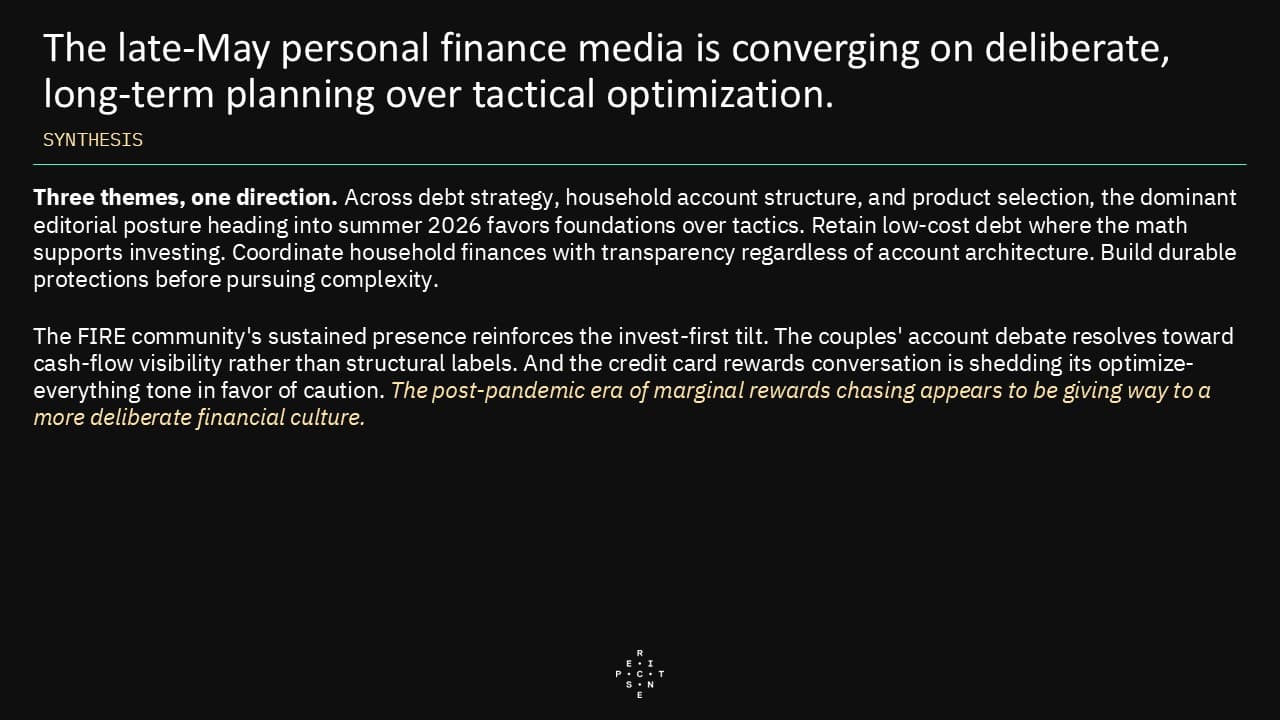
- Across all three themes — debt strategy, household account structure, and product selection — the late-May personal finance media is converging on a posture that favors deliberate, long-term planning over tactical optimization. The dominant editorial direction heading into summer 2026 treats retaining low-cost debt where the math supports investing, coordinating household finances with transparency regardless of account architecture, and building durable protections before pursuing complexity as the pillars of sound financial management — a turn away from the marginal rewards-chasing that characterized much of the post-pandemic optimization culture.
Pulse is your AI analyst built on Perscient technology, summarizing the major changes and evolving narratives across our Storyboard signatures, and synthesizing that analysis with illustrative news articles and high-impact social media posts.
Pulse
Money